- Home
- Braemac Blog
- Mastering Short-Range Wireless Communication
Mastering Short-Range Wireless Communication

About Jari Haiston
Jari Haiston is a Marketing Communications Lead at the Exponential Technology Group (XTG). Leveraging nearly a decade of technical writing and marketing experience, she supports Braemac Americas and other XTG brands through specialized technical content creation, social media management, and on-page SEO/AEO/GEO strategy. Jari focuses on translating complex technologies into clear, engaging content that helps engineers, decision-makers, and innovators drive real-world impact.
When it comes to electronics, understanding short-range wireless communication technology is key. It defines how far two antennas in a network can reliably transmit data across a frequency band. This technology has transformed IoT applications, powering wireless devices in industries such as industrial automation, smart home, and healthcare. Selecting the optimal protocol for your device depends on its intended use and communication requirements.
- Frequency & Impedance: What's your device's antenna frequency and impedance, and how do they affect data transmission?
- Physical Obstacles: Are there barriers like walls or appliances affecting communication?
- Noise Level: Will noise interfere with wireless communication?
Bluetooth® Low Energy (LE)
Based on the IEEE 802.15.1 standard, Bluetooth® is a widely adopted short-range wireless communication technology used in transceivers, basebands, protocol stacks, and more. Analysts anticipate that annual Bluetooth enabled device shipments will continue growing through 2026 and beyond, with long‑term forecasts showing total shipments will approach 8 billion units by 2029 as the ecosystem expands across consumer, industrial, and IoT markets.
In comparison to other Bluetooth variants, Bluetooth LE is particularly effective for power-, cost-, and size-constrained projects. It now supports LE Audio, Auracast broadcast audio, and LE Mesh networking for smart home and industrial IoT applications. It is optimized for short-range communications, making it ideal for power-efficient applications such as wearables, smart IoT devices, and battery-powered accessories.
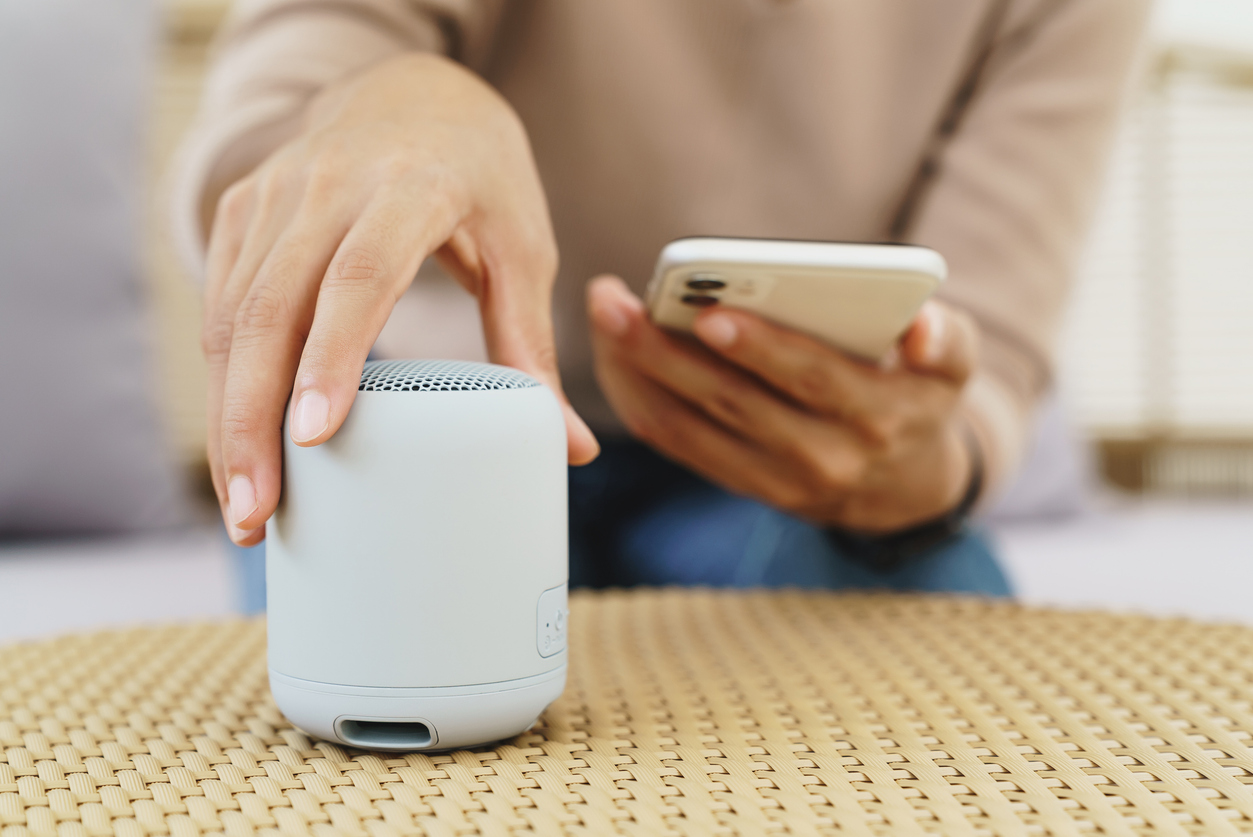
Bluetooth LE Key Features:
- Ultra-low power consumption
- Cost-effective
- Compatible with Android, iOS, and more
- Enhanced transmission range and receiver sensitivity
- Runs for years on coin-cell batteries
| Application Scenario | Classic Bluetooth | Bluetooth Low Energy |
| Audio Streaming | Continuous audio (headsets, speakers) | Not optimized (LE Audio emerging) |
| Data Transmission | High-throughput, continuous | Periodic, low throughput |
| Power Efficiency/Wearables | Higher power use | Ultra-low power, long battery life |
| Networking/Location | Traditional pairing, few connections | Supports broadcast, mesh, and many devices |
Ultra-Wideband (UWB)
Ultra-wideband (UWB) is a high-performance communications protocol that’s an optimal solution for interference-free short-range wireless transmissions. It’s low-power and cost-efficient. UWB has a high bandwidth for precise tracking, data collection, and communication. UWB adoption has grown in smartphones, wearables, automotive, and AR/VR applications, providing secure and precise location services for consumer and industrial IoT.
UWB Key Features:
- Low power (0.5 mW / -41.3 dBm/MHz)
- 10-30 cm precision location accuracy
- High security
- Multipath and interference protection
802.15.4 Based Zigbee, Z-Wave, and Thread Wireless Protocols
Based on IEEE 802.15.4, Thread, Zigbee, and Z-Wave technologies empower smart homes with low power consumption and data rates. Thread and Zigbee devices now integrate with Matter (formerly Project CHIP) for improved smart home interoperability in 2026. Managed by the Z-Wave Alliance, Z-Wave separates itself from Thread and Zigbee by operating on unlicensed frequency bands to avoid interference.
Zigbee Key Features:
- Low latency for responsive applications
- 35 ft. range for typical smart home setups
- Supports up to 65,000 nodes
- Durable battery life for connected devices
- Flexible network topologies: mesh or star
Z-Wave Key Features:
- 100 ft. range for larger areas
- Connects up to 232 connections
- 9.6-100 kbps data rate
- Operates at 908/916 MHz
Thread Key Features:
- 100 ft. range
- Supports mesh topology (can also support star)
- Connects up to 300 connections
- 250 kbps data rate
- Operates at 2.4 GHz
Radio Frequency Identification (RFID)
Based on Automatic Identification and Data Capture (AIDC), Radio Frequency Identification (RFID) is a powerful solution for asset tracking and object identification. RFID can collect data about objects without line of sight, making it ideal for inventory management, access control, and logistics. RFID tags operate in three frequency ranges (LF, HF, UHF), each suited for different applications:
- Low Frequency (LF RFID) supports 30 kHz to 300 kHz and provides a tracking range of up to 10 cm. LF RFID applications include livestock tracking and access control.
- High Frequency (HF RFID) supports 3 to 20 MHz and provides a tracking range of 10 cm to 1 m. HF RFID applications include ticketing, payment tracking, and item transfers.
- Ultra-High Frequency (UHF RFID) supports 300 MHz to 3 GHz and provides a tracking range of up to 12 m. UHF RFID applications include inventory tracking, pharmaceutical anti-counterfeiting, and wireless communications.


| RFID Type | Frequency | Read Range | Data Transfer Speed | Typical Use Cases |
| LF (Low Frequency) | 125–134 kHz | Up to 10 cm | ~8 kbps | Access control, animal tagging, car immobilizers |
| HF (High Frequency) | 13.56 MHz | Up to 1 m (varies by standard) | ~106–848 kbps | Contactless payments, ID cards, smart tickets |
| UHF (Ultra-High Frequency) | 860–960 MHz | 3-12 m | ~40–640 kbps | Inventory tracking, supply chain, logistics |
Wi-Fi Location Tracking
Based on IEEE 802.11 standards, Wi-Fi is widely used for internet access and local device connectivity. Wi-Fi location tracking leverages techniques such as Time Difference of Arrival (TDOA) and operates over existing Wi-Fi infrastructure, typically providing a tracking range of 3-5 m. Wi-Fi 6, 6E, and 7 standards in 2026 enhance throughput, reduce latency, and enable more accurate indoor positioning for IoT applications, while Wi-Fi Aware and Wi-Fi RTT improve location tracking.
Choosing the Optimal Short-Range Protocol with Solutions Available at Braemac Americas
Selecting optimal short-range wireless protocol gives devices reliable connectivity, efficient performance, and the ability to operate seamlessly within their environment. By combining the low-power efficiency of Bluetooth LE, the precision of UWB, the versatility of Zigbee, Z-Wave, and Thread, the tracking capabilities of RFID, or the familiarity of Wi-Fi into a unified design approach, devices can achieve optimized performance and adaptability.
Braemac Americas offers a broad portfolio of wireless solutions, protocol expertise, and design support for end-to-end device development. Our Applications Engineers provide validated guidance and interoperable solutions, helping organizations select the protocol that aligns with performance, power, and connectivity requirements throughout the product lifecycle.
Silicon Labs XG24
The EFR32xG24 Wireless Gecko Wireless SoC from Silicon Labs is featured on the BRD4198A Radio Board, which plugs directly into a Wireless Starter Kit Mainboard or Wireless Pro Kit Mainboard. These mainboards include tools for easy evaluation and development of wireless applications, including an onboard J-Link debugger for programming and debugging, a Virtual COM port for serial communication, an Advanced Energy Monitor for real-time current and voltage tracking, and a Packet Trace Interface for insight into transmitted and received packets. Integrated sensors and peripherals demonstrate the EFR32xG24’s capabilities, and a 20-pin EXP header allows connection to expansion boards or direct access to the radio board’s I/Os, enabling flexible prototyping and development of Bluetooth and other wireless solutions.


Nordic Semiconductor nRF54L15
The nRF54L15 Development Kit (DK) from Nordic Semiconductor provides a complete platform to explore the ultra-low power nRF54L Series wireless SoCs. Designed for the nRF54L15, nRF54L10, and nRF54L05, the kit supports Bluetooth LE, Matter, Thread, Zigbee, and 2.4 GHz proprietary protocols, enabling developers to build flexible, low-latency, and energy-efficient wireless applications. With robust memory options, extended peripherals, and support from the nRF Connect SDK and Nordic Developer Academy courses, the nRF54L15 DK simplifies design, accelerates development, and helps deliver secure, high-performance connectivity solutions.


Braemac Americas offers a wide range of Ultra-Wideband (UWB) solutions, delivering low-power, short-range, high-bandwidth wireless communication with up to 10 cm location accuracy. Ideal for real-time location systems (RTLS) and secure device-to-device communication, our portfolio includes development kits and modules from Qorvo, Nordic Semiconductor, and Taoglas, providing flexible options for rapid prototyping and deployment.
Image | Manufacturer | Part Number | Description | Data Sheet | Pricing | Buy | |
|---|---|---|---|---|---|---|---|
 | Qorvo | DWM1001C | RF Modules DWM1001C UWB XCVR Module (FCC comp) |  | 1: $49.98 | ||
 | Qorvo |
| RF Development Tools DWM1001C UWB XCVR Module (FCC comp) | | 1: $299.00 | ||
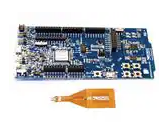 | Nordic Semiconductor |
| Bluetooth Development Tools - 802.15.1 Dev kit for NRF52840 Bluetooth 5 | | 1: $49.33 | ||
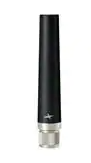 | Taoglas |
| Antennas TU.60.3H31 UWB 3dBi Terminal Mount Antenna covering 3.5-8GHz | | 1: $29.68 | ||
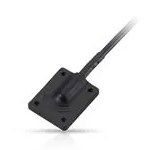 | Taoglas | PCUWB01.01.0500G | Antennas PCUWB01.01.0500G Ultra Wide Band FR4 Antenna 3-5GHz 6-8GHz with 500mm TGC-200 SMA(M)ST | | 1: $25.54 |
Digi International Zigbee Mesh Kit
The Digi International XBee Zigbee Mesh Kit makes it easy for OEMs to integrate Zigbee mesh networking into their applications. Built on Silicon Labs’ Ember EM35x SoC with a 32-bit ARM® Cortex® M3 processor, the modules support both standard and programmable versions for flexible, custom development. The kit features through-hole and surface-mount form factors, high-speed SPI interface, and industry-leading low-power operation, enabling rapid application development and reliable wireless connectivity. Digi XBee Zigbee Development Kits are ideal for energy, controls, and IoT applications where time to market and integration efficiency are critical.


Silicon Labs Z-Wave 800
The Silicon Labs Z-Wave 800 Development Kits (PK800A and PK800B) provide everything developers need to explore the ZGM230S Z-Wave® SiP Module. Featuring the BRD4205B Radio Board with selectable PCB or SMA antenna, the kits plug into Wireless Starter or Pro Kit mainboards for seamless development and debugging. With an on-board J-Link debugger and Virtual COM port, they enable easy creation of secure, low-power Z-Wave applications for smart home and IoT devices.


Nordic Semiconductor nRF52840
The Nordic Semiconductor nRF52840 is a high-performance, multiprotocol Bluetooth Low Energy (LE) SoC built for advanced IoT and connected device applications. Supporting Bluetooth 5.3, Thread, Zigbee, and more, it combines ultra-low power consumption with extensive memory (1 MB Flash, 256 KB RAM) and a 64 MHz Cortex-M4 processor with FPU for complex computations. On-chip security with the ARM CryptoCell accelerator, USB 2.0, and flexible digital interfaces make it ideal for smart home, industrial mesh networks, wearables, and interactive entertainment.


Lantronix RFID Transponders
Lantronix RFID transponders deliver reliable, high-performance tracking for a wide range of applications. The 60050 transponder protects against environmental factors like moisture, dust, and temperature changes, ensuring durability in industrial equipment and smart devices. The 60208 transponder supports IoT, smart city, and autonomous vehicle applications, providing secure, efficient wireless communication across healthcare, transportation, and manufacturing sectors. Together, these RFID solutions offer dependable, easy-to-integrate components for modern asset tracking and identification systems.

Ezurio Sterling LWB5+
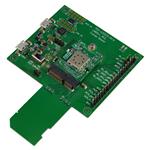
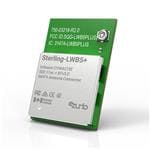
The Ezurio Sterling LWB5+ series offers compact, integrated 1x1 SISO 802.11 a/b/g/n/ac Wi-Fi and dual-mode Bluetooth® 5.2 Low Energy in a single module optimized for low-power mobile devices. Pre-calibrated and fully integrated with RF paths, diplexer, power management, and selectable antennas, these modules simplify implementation while enabling extended battery life. Supporting data rates up to 433.3 Mbps and simultaneous Wi-Fi/Bluetooth operation, the LWB5+ series delivers reliable, high-performance connectivity for mobile, IoT, and embedded applications. Multiple variants, including chip antenna and U.FL connector options, provide design flexibility to match diverse platform requirements.

Short-Range Wireless Connection Frequently Asked Questions
What is short-range wireless communication technology?
Short-range wireless communication technology allows devices to transmit data over short distances. This technology powers IoT applications, smart home devices, and industrial automation using protocols like Bluetooth LE, UWB, Zigbee, Z-Wave, Thread, RFID, and Wi-Fi.
Short-range wireless communication technology allows devices to transmit data over short distances. This technology powers IoT applications, smart home devices, and industrial automation using protocols like Bluetooth LE, UWB, Zigbee, Z-Wave, Thread, RFID, and Wi-Fi.
How do I choose the optimal short-range wireless protocol for my device?
Choosing the optimal short-range wireless protocol for your device depends on data transmission needs, power consumption, network size, obstacles, and frequency band. Bluetooth LE, UWB, and Zigbee or Thread are examples optimized for different IoT and smart home applications.
Choosing the optimal short-range wireless protocol for your device depends on data transmission needs, power consumption, network size, obstacles, and frequency band. Bluetooth LE, UWB, and Zigbee or Thread are examples optimized for different IoT and smart home applications.
What are the advantages of using Bluetooth LE for IoT applications?
The advantages of using Bluetooth LE for IoT applications include ultra-low power use, long battery life, mesh networking, and wide device compatibility. Bluetooth LE is ideal for smart home, wearable, and industrial IoT devices.
The advantages of using Bluetooth LE for IoT applications include ultra-low power use, long battery life, mesh networking, and wide device compatibility. Bluetooth LE is ideal for smart home, wearable, and industrial IoT devices.
How is Ultra Wideband (UWB) used in short-range wireless communication technology?
Ultra Wideband (UWB) is used in short-range wireless communication technology for precise tracking, interference-free data transmission, and secure location services. UWB is applied in smartphones, wearables, automotive, AR/VR, and industrial IoT.
Ultra Wideband (UWB) is used in short-range wireless communication technology for precise tracking, interference-free data transmission, and secure location services. UWB is applied in smartphones, wearables, automotive, AR/VR, and industrial IoT.
How can Braemac Americas help with selecting the best short-range wireless protocol for my project?
Braemac Americas can help select the best short-range wireless protocol by providing expert guidance and design support. Their Applications Engineers ensure your device uses the best protocol, including Bluetooth LE, UWB, Zigbee, Z-Wave, Thread, RFID, or Wi-Fi, for optimal performance, power efficiency, and reliable connectivity.
Braemac Americas can help select the best short-range wireless protocol by providing expert guidance and design support. Their Applications Engineers ensure your device uses the best protocol, including Bluetooth LE, UWB, Zigbee, Z-Wave, Thread, RFID, or Wi-Fi, for optimal performance, power efficiency, and reliable connectivity.
Resources
- Long Range vs. Short Range Wireless Communications: What’s Best for Your Project?
- Things You Should Know About Bluetooth Range
- Technology of short-distance wireless communication and its application based on equipment support
- Zigbee, Z-Wave, Thread, and WeMo: What’s the Difference?
- Wireless Connectivity Options for IoT Applications – Technology Comparison
About Jari Haiston
Jari Haiston is a Marketing Communications Lead at the Exponential Technology Group (XTG). Leveraging nearly a decade of technical writing and marketing experience, she supports Braemac Americas and other XTG brands through specialized technical content creation, social media management, and on-page SEO/AEO/GEO strategy. Jari focuses on translating complex technologies into clear, engaging content that helps engineers, decision-makers, and innovators drive real-world impact.