- Home
- Braemac Blog
- What is a Smart Traffic Management System?
What is a Smart Traffic Management System?

About Jari Haiston
Defining Smart Traffic Management Systems
One of the cornerstones of smart city design is having an integrated smart transportation solution. It can be argued that a city is not completely intelligent without a smart traffic management system. Intelligent transportation systems (ITS), or smart traffic management systems, provide an organized, integrated approach to minimizing congestion and improving safety on city streets through connected technology.
Increased Demand for Smart Traffic Management Systems
With more than 250 global smart city projects in development, the increased demand and adoption rate for ITS solutions is no surprise. PR Newswire expects the intelligent traffic management system market to grow to $19.91 billion by 2028 at a 10.1% CAGR.
The Technology Behind Intelligent Traffic Systems (ITS)
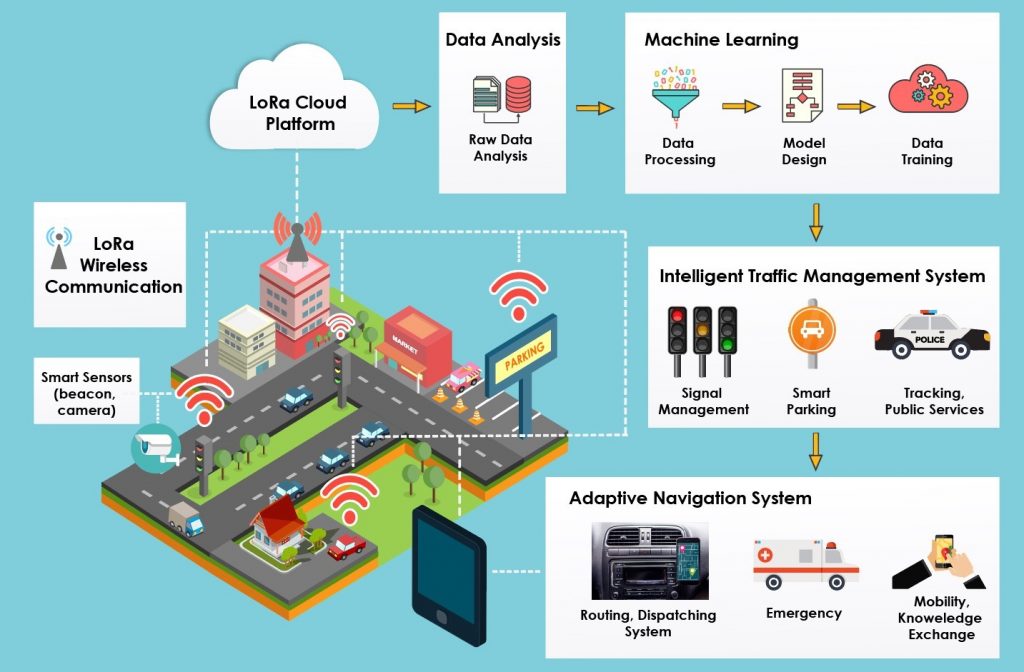
Digi International, a trusted Braemac Americas supplier partner, defines smart traffic management systems as technology solutions that municipalities can integrate into their traffic cabinets and intersections today for fast, cost-effective improvements in safety and traffic flow on their city streets. Efficient and successful smart traffic management systems utilize next-generation hardware and software to optimize traffic infrastructure.
| Hardware | Software |
|---|---|
IoT Sensors Including:
Air quality sensors | Cloud computing and edge processing capabilities:
All supporting transportation apps |
| Connected CCTV cameras | Big data and predictive analytics |
| Connected traffic light systems | AI/ML:
|
| Smart toll gates/electronic road pricing gantry systems | Location-based services |
| Edge devices – chips on edge nodes for faster data processing | – |
Smart Traffic Sensors
IoT sensors provide the backbone of data that intelligent transportation management systems analyze to increase actionable insights. Smart traffic management systems use integrated sensors like:
- Radio frequency identification (RFID) tags
- Automatic identification and data collection (AIDC) tags
- Temperature sensors
- Air quality sensors
With amount of data that ITS generate, it’s crucial that the system integrates cloud computing and edge processing.
Connected Video Monitoring
One of the main technological aspects of smart traffic management systems is video detection systems with integrated edge processing. Connected video monitoring solutions within the realm of traffic safety are referred to as traffic incident management systems (TIMs). A TIM allows city planners to gain real-time insights on regarding traffic conditions and respond to incidents through HD footage, image detection, and image recognition.
Connected Traffic Light Systems
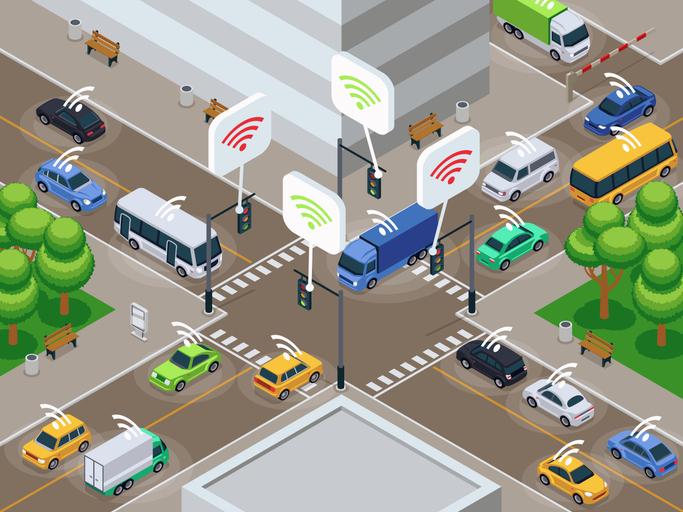
As opposed to conventional traffic lights, smart traffic light systems integrate the aforementioned sensor and connected video monitoring technologies to account for intersection wait times, vehicle speed, and/or pedestrian traffic. Intelligent traffic light systems incorporate artificial intelligence (AI) and Machine Learning (ML) processes to enable computer vision, optical character recognition (OCR), and reinforcement learning.
Top 5 Benefits of Smart Traffic Management Systems
It could be argued that a smart city isn’t completely intelligent without a smart transportation solution. Additionally, many ITS benefits extend past roadways to optimize city infrastructure as a whole. We’ve outlined the top 5 benefits of smart traffic management systems below.
1. Predictive Insights
One of the top benefits of smart traffic management systems is the predictive insights that they offer. Data collected from smart traffic sensors can be analyzed to assist governing bodies in determining how frequently roadways are used, the daily quantity of vehicles at specific intersections, and essential urban data. Ultimately, ITS can provide crucial preventative roadway insights.
2. Enhanced Safety
According to the Governors Highway Safety Association (GHSA), drivers struck and killed an estimated 7,485 people on foot in 2021. ITS’ integrated sensor technology is a next-generation life-saving solution. Portland, Oregon is already putting intelligent traffic management systems to the test. Their public transit agency, TriMet, has their fleet of busses equipped with infrared meters (Figure 3) that communicate with traffic light receivers to appropriately time stops. While these meters offer a safe transportation solution, it also enables faster transportation.
3. Cost Reduction
The National Highway and Traffic Safety Administration reported that traffic collisions cost the United States $340 billion in 2019. Smart traffic management systems enable safe transportation. Intelligent traffic systems help to limit and mitigate traffic collisions, fatalities, injuries, and property damage through its inherent advanced safety properties.
4. Improved Emergency Response
Behind every smart traffic management system is route optimization. When roadways provide ideal traffic conditions, cities are better prepared for emergencies. Minimized congestion enables improved emergency vehicle response time and the real-time insights provided by smart traffic management systems allow for enhanced flexibility, action, and organization in the event of a large-scale public emergency (tornado, earthquake, flood, etc.).
5. Minimized Emissions
The organic route optimization, ridesharing opportunities, and parking solutions that smart traffic management systems offer equates to environmentally friendly, sustainable technology. Juniper Research predicts that continued smart traffic management systems could potentially cut 205 million metric tons of CO2 emissions by 2027. It’s clear that smart solutions can play a large role in reducing our carbon footprint.
Develop Your Smart Traffic Management System with Symmetry Electronics' Solutions
Are you a developer looking to create your next smart traffic solution? Our extensive portfolio of industry-leading sensors and connect solutions are ideally suited for wireless, IoT, and industrial internet of things (IIoT) applications.


Frequently Asked Questions (FAQ)
Intelligent Transportation Systems (ITS) combine connected hardware and software to monitor, manage, and improve transportation networks. Sensors, traffic controllers, cameras, and communication modules collect real-time data that helps transportation teams understand conditions and respond more effectively.
Smart traffic systems use data from sensors and connected infrastructure to adjust signal timing and traffic flow. By responding to real world conditions, such as congestion or vehicle volume, these systems help reduce delays and improve consistency for public transit and commuters.
Yes, ITS can help prioritize traffic signals and provide real-time roadway data to support faster emergency response. This allows first responders to move through traffic more efficiently during incidents or high demand situations.
ITS rely on a mix of hardware and software, including IoT sensors, connected cameras, traffic controllers, communication networks, and analytics platforms. Reliable hardware is essential for collecting accurate data that systems depend on for decision making.
Yes. When designed with interoperable components, ITS can scale across intersections, corridors, and citywide networks. Using standardized hardware and communication protocols makes it easier to expand systems over time without major redesigns.
About Jari Haiston
Subscribe
Stay up to date with industry and supplier news!