- Home
- Braemac Blog
- Top 16 Benefits of Edge Computing
Top 16 Benefits of Edge Computing
In IoT

About Jari Haiston
Jari Haiston is a Marketing Communications Lead at the Exponential Technology Group (XTG). Leveraging nearly a decade of technical writing and marketing experience, she supports Braemac Americas and other XTG brands through specialized technical content creation, social media management, and on-page SEO/AEO/GEO strategy. Jari focuses on translating complex technologies into clear, engaging content that helps engineers, decision-makers, and innovators drive real-world impact.
What is Edge Computing?
Originating in the 1990s, edge computing has never been more relevant, especially when it comes to IoT. It's an innovative type of computation that allows local processing and storage of data rather than routing it through centralized data centers. When data computation and storage happen closer to the data source, the benefits are immediate.
- Enhanced efficiencies
- Reduced latency
- Improved data security
- Increased uptime
- Decreased costs
What Are Edge Computing Advantages in IoT?
Edge computing presents many advantages in IoT devices and applications across smart city, manufacturing, and retail sectors. Manufacturers can leverage locally processed IoT sensors to enhance predictive maintenance, monitor production machinery, and streamline inventory management. In smart cities, distributed processing helps organize and manage the enormous volumes of real-time data generated by smart cameras, IoT traffic lights, and connected vehicles.
The Top 16 Benefits of Edge Computing
Microsoft’s paper, IoT Signals, has outlined the top 16 benefits of utilizing edge computing systems to enhance IoT devices and systems:
1. Cloud Security – The localized analytic nature of edge computing reduces the number of data transfers sent between devices and a centralized data center, resulting in enhanced protection of sensitive information in cloud storage.
2. Device/Asset Security – The close physical proximity of local processing improves data security, offers integrity, and provides a more secure solution than routing data to remote servers.
3. Quality Assurance – Quality assurance is a key feature that developers seek when integrating edge computing in their IoT devices and systems. Edge computing offers continuous reliability in data analysis quality regardless of poor internet or other connectivity issues.
4. Securing the Physical Environment – Users looking to integrate edge computing in IoT benefit from the enhanced physical security this model offers, particularly when handling sensitive information.
5. Employee Productivity – Locally processed IoT devices allow for increased uptime in business operations, improving overall user experience for operators and staff.
6. Operations Optimization – Local data processing optimizes IoT systems and device operation, supporting real-time responsiveness across facilities.
3. Quality Assurance – Quality assurance is a key feature that developers seek when integrating edge computing in their IoT devices and systems. Edge computing offers continuous reliability in data analysis quality regardless of poor internet or other connectivity issues.
4. Securing the Physical Environment – Users looking to integrate edge computing in IoT benefit from the enhanced physical security this model offers, particularly when handling sensitive information.
5. Employee Productivity – Locally processed IoT devices allow for increased uptime in business operations, improving overall user experience for operators and staff.
6. Operations Optimization – Local data processing optimizes IoT systems and device operation, supporting real-time responsiveness across facilities.


7. Condition-Based Maintenance – The increased insights of these devices provides users with the ability to detect and monitor abnormalities in equipment with condition-based monitoring (CBM), powered by real-time analytics
8. Worker and Workplace Safety – IoT devices like sensors and wearables are key players in improving worker and workplace safety.
9. Sales Enablement – As a distributed information technology (IT), local computation supports real-time data control over critical data that businesses can utilize to enable increased sales.
10. Energy Optimization – The technology’s comprehensive organization and management of data accrued by IoT devices provides businesses with increased insights from data analysis that can be used to optimize resources like energy, fuel, and labor.
8. Worker and Workplace Safety – IoT devices like sensors and wearables are key players in improving worker and workplace safety.
9. Sales Enablement – As a distributed information technology (IT), local computation supports real-time data control over critical data that businesses can utilize to enable increased sales.
10. Energy Optimization – The technology’s comprehensive organization and management of data accrued by IoT devices provides businesses with increased insights from data analysis that can be used to optimize resources like energy, fuel, and labor.
11. Sustainability Uses – Edge computing is uniquely qualified to support sustainable applications like smart cities and digital twins, using machine learning to improve efficiency over time.
12. Supply Chain Management – Edge computing can be applied to IoT systems to automate time-sensitive supply chain processes.
13. Location Intelligence – Real-time edge inference supports location-aware AI for asset tracking, geofencing, and proximity-based analytics.
14. Asset Tracking – A growing number of companies are utilizing locally processed IoT data to enable real-time monitoring and visibility of their physical assets.
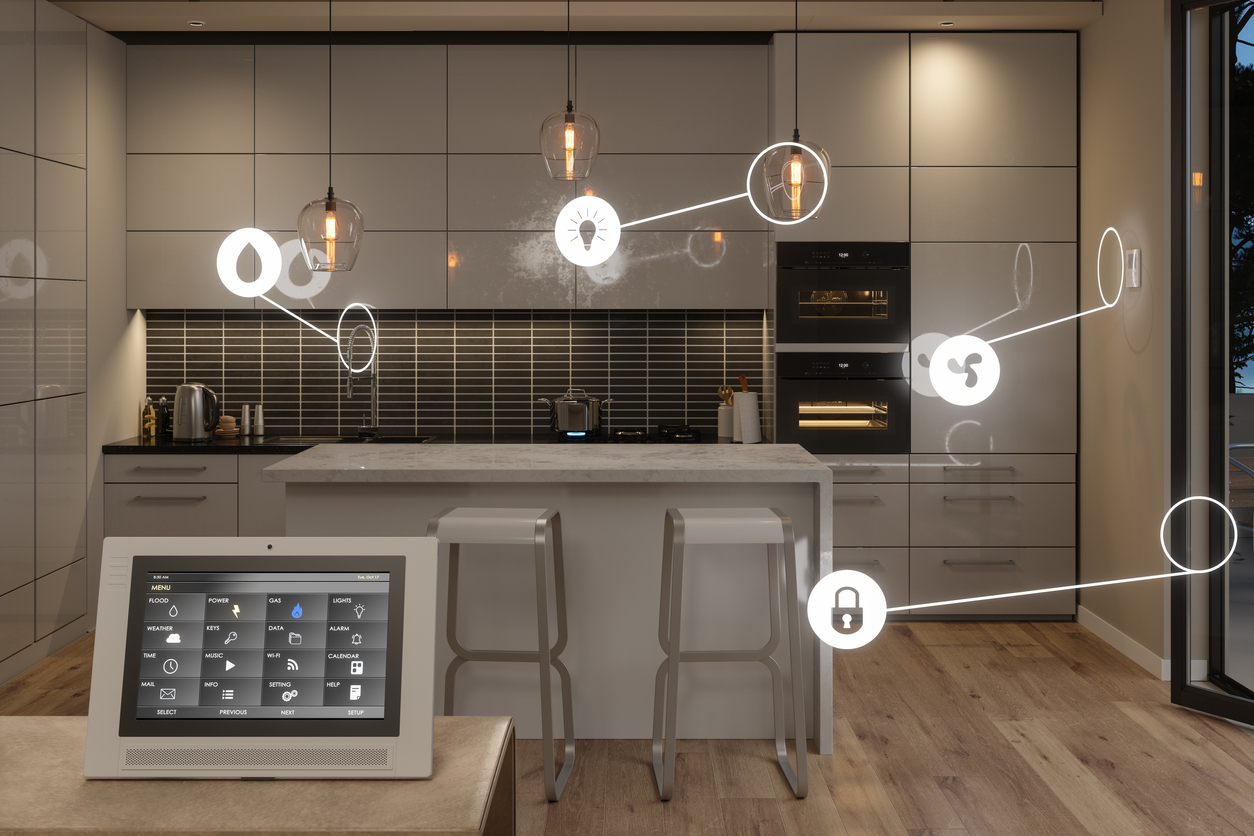
15. Personal Comfort – Edge computing powers smart building and home automation systems that respond instantly to occupant preferences, adjusting lighting, temperature, and environment without delay.
16. Space Optimization – IoT devices and systems generate a massive amount of data; edge computing is a helpful method of organizing and optimizing the space the data takes up.
12. Supply Chain Management – Edge computing can be applied to IoT systems to automate time-sensitive supply chain processes.
13. Location Intelligence – Real-time edge inference supports location-aware AI for asset tracking, geofencing, and proximity-based analytics.
14. Asset Tracking – A growing number of companies are utilizing locally processed IoT data to enable real-time monitoring and visibility of their physical assets.
15. Personal Comfort – Edge computing powers smart building and home automation systems that respond instantly to occupant preferences, adjusting lighting, temperature, and environment without delay.
16. Space Optimization – IoT devices and systems generate a massive amount of data; edge computing is a helpful method of organizing and optimizing the space the data takes up.

Accelerate Edge Computing Development with Braemac Americas
Braemac Americas helps engineers bring edge computing solutions to life across IoT, IIoT, and wireless applications. Our extensive component portfolio connects development teams with industry-leading suppliers, giving them access to the hardware they need to build smarter, faster, and more reliable systems across manufacturing, retail, and smart city environments. Whether you're at the proof-of-concept stage or scaling to full deployment, Braemac Americas has the components and expertise to get you there.
Lantronix Open-Q 8550CS
The Lantronix Open-Q™ 8550CS Development Kit is a comprehensive platform for fast-tracking IoT product development, built around the Open-Q™ 8550CS SOM and an open-frame carrier board exposing all available I/O. Powered by the Qualcomm® Dragonwing™ QCS8550, it delivers a Low Power AI subsystem with a dedicated DSP and AI accelerator supporting always-on audio, sensors, and camera capabilities. With support for C-PHY and D-PHY MIPI CSI and GMSL camera interfaces, dual MIPI DSI, DisplayPort, Gigabit Ethernet, GNSS, and both Android™ 13 and Yocto Linux Kirkstone, it provides developers a capable and flexible foundation for camera tuning, voice control, machine learning, and thermal and power optimization.

MediaTek Genio 1200 EVK
The MediaTek Genio 1200 EVK is a premium edge AI IoT development platform built around the MediaTek Genio 1200 SoC, combining an octa-core Arm CPU, Mali-G57 GPU, and integrated NPU delivering 4.8 TOPS of AI performance in an efficient 6nm design suited for fanless and low-power deployments. With comprehensive I/O, Wi-Fi 6, dual camera support, a 7-inch touch display, and support for Android, Linux Yocto, and Ubuntu, it provides a flexible foundation for edge AI, IoT gateway, digital signage, and smart home product development.

Synaptics Astra
Synaptics Astra™ Machina Foundation Series is a modular, AI-native edge development platform, featuring the SL1680 Dev Kit for rapid prototyping of IoT and embedded computing applications. The kit supports flexible compute modules, integrated Wi-Fi and Bluetooth, and versatile I/O options such as HDMI, USB, M.2, and MIPI interfaces. With a unified Yocto Linux software stack and Synaptics’ AI toolkit, developers can build AI-enabled video, audio, and sensor applications, including object detection, segmentation, and voice processing. Astra Machina provides an open, robust platform for consumer, enterprise, and industrial IoT designs.

Frequently Asked Questions About Edge Computing
What is edge computing and how does it work?
Edge computing is a method of processing and storing data locally, at or near the data source, rather than sending it to centralized data centers. This reduces latency, improves response times, and keeps critical operations running even when connectivity is limited.
What are the benefits of edge computing in IoT?
Edge computing in IoT enables real-time data processing, improved data security, reduced latency, and increased uptime. By processing data closer to the source, IoT devices can respond faster, operate more reliably, and handle sensitive information more securely.
What are the most common edge computing use cases?
Common edge computing use cases include predictive maintenance in manufacturing, inventory and logistics management in retail, traffic and infrastructure management in smart cities, asset tracking, and condition-based monitoring across industrial environments.
How does edge computing improve data security?
Edge computing improves data security by reducing the amount of sensitive information transmitted to remote servers or centralized data centers. With local processing, data exposure is minimized and organizations maintain greater control over their information.
What is the difference between edge computing and cloud computing?
Cloud computing routes data to centralized data centers for processing and storage, while computing handles that processing locally at or near the data source. Edge computing systems are better suited for applications that require real-time responsiveness, while cloud computing excels at large-scale storage and analysis.
How can Braemac Americas support your edge computing development?
Braemac Americas provides engineers with the components and expertise needed to build and deploy edge computing solutions across IoT, IIoT, and wireless applications. From proof of concept to full deployment, our portfolio of hardware from industry-leading suppliers gives development teams everything they need to build smarter, faster, and more reliable systems.
About Jari Haiston
Jari Haiston is a Marketing Communications Lead at the Exponential Technology Group (XTG). Leveraging nearly a decade of technical writing and marketing experience, she supports Braemac Americas and other XTG brands through specialized technical content creation, social media management, and on-page SEO/AEO/GEO strategy. Jari focuses on translating complex technologies into clear, engaging content that helps engineers, decision-makers, and innovators drive real-world impact.
Tags:
AI
,
Asset Tracking
,
Automated Solutions
,
Data Processing
,
Edge Computing
,
IIoT
,
IoT
,
Machine Learning
,
Manufacturing
,
Sensors
,
Smart Cities
,
Smart Home
,
Supply Chain Solutions
,
Sustainability
Subscribe
Stay up to date with industry and supplier news!