- Home
- Braemac Blog
- Edge AI/ML vs. CPU/GPU/NPU
Edge AI/ML vs. CPU/GPU/NPU

About Ray Pan
Ray Pan is an Applications Engineer at Symmetry Electronics. He has a Bachelor’s in Electrical Engineering from San Jose State University. With over 15 years of hands-on experience in the electronics industry, Ray serves as an excellent technical consulting resource for design engineers. Specializing in consumer and professional audio-video, FPGA, and mmWave applications–Ray develops insightful technical articles, conducts technical trainings for inside sales and customers, provides system architecture analyses, and interprets market trends covering technical products. Recognized for his talents and contributions, Ray is the proud recipient of the Lattice Semiconductor FAE of the Year 2020 Award for America.
.jpg)
The rise of artificial intelligence in IoT, mobile, robotics, and automotive applications has created a new set of hardware decisions that directly affect how well a system performs in the real world. At the center of those decisions is processor selection. Edge AI refers to AI computation that runs directly on the device rather than in the cloud. This means the processor handling that workload determines latency, power consumption, and overall performance.
When comparing edge AI vs. CPU, GPU, and NPU, the distinction is not between competing technologies, but between a workload and the processors that enable it. Edge AI defines where and how AI runs, while CPUs, GPUs, and NPUs define how efficiently that work gets done. Processor selection ultimately determines whether an edge AI system meets real-world performance demands.
Poor selection can lead to thermal constraints, missed real-time targets, or impractical battery life. Strong alignment between workload and processor allows the system to operate as intended, directly on-device, without relying on a network connection.
CPUs, GPUs, and NPUs each have distinct strengths, and the best edge AI systems often use all three. Understanding what each processor is built for is the starting point for making an informed decision.
CPU in Edge AI: Purpose, Strengths, and Limitations
The central processing unit is the foundational processor in virtually every computing system. It is designed for versatility, handling sequential tasks, and complex logic across a wide range of workloads.

In any given system, the CPU is typically responsible for running the operating system, managing application logic, and coordinating everything else happening on the device. In edge AI, CPUs are commonly used for control-heavy tasks like decision-making and pipeline coordination, as well as light AI inference. Inference is the process of running a trained AI model to make predictions on new data, and for small models running infrequently, a CPU handles it adequately. A microcontroller in a smart home system making basic automation decisions is a straightforward example of this kind of workload.
The limitations show up when inference needs to scale. AI models perform enormous numbers of mathematical operations simultaneously, and CPUs are not built for that kind of parallelism. They process tasks sequentially across a relatively small number of cores. Consequently, latency climbs and power consumption per inference becomes inefficient as model complexity increases. For prototyping and low-frequency predictions, a CPU is a reasonable choice. For sustained real-time inference, it’s best to make another choice.
GPU for Edge AI: Parallel Processing and Inference
Graphics processing units were originally developed for rendering graphics, a task that requires processing large amounts of data simultaneously across many parallel operations. That architecture turned out to map well onto AI workloads, which rely heavily on matrix and vector computations: the core mathematical operations behind most neural network algorithms. Where a CPU might have a handful of powerful cores, a GPU has hundreds or thousands of smaller ones working in parallel, which is what makes it effective for large-scale AI math.
GPUs are the standard tool for AI model training, where enormous datasets need to be processed repeatedly to tune a model's parameters. They are also widely used for high-throughput inference in cloud environments and edge servers, such as processing video streams or running complex models in real time on systems with sufficient power budgets. Frameworks like NVIDIA CUDA have also given GPUs a mature software ecosystem that makes development more straightforward.
The trade-off at the edge is power. GPUs draw significantly more wattage than CPUs or NPUs, and in fanless, battery-powered, or thermally constrained enclosures, that becomes a hard engineering problem. For edge devices with enough thermal headroom, a GPU is a strong option. For compact or power-sensitive deployments, the power cost is often prohibitive.
NPU in Edge AI: Efficient, Low-Latency AI Inference
Neural processing units are purpose-built for neural network operations. Unlike CPUs and GPUs, which were designed for other primary use cases and adapted for AI, NPUs are architected specifically around the computations AI models perform.

They include dedicated on-chip memory and hardware optimized for matrix and tensor operations, which allows them to run AI inference with significantly lower latency and power consumption than a general-purpose processor would require for the same task. This efficiency makes NPUs well suited for always-on and battery-powered edge applications. Smartphone face unlock, voice assistant wake-word detection, real-time vision processing in automotive systems. These are workloads that run continuously, often in the background, where power overhead directly affects battery life and thermal design. An NPU handles them in a way a CPU or GPU simply cannot match on efficiency.
The trade-off is flexibility. NPUs are specialists. Models typically need to be converted and optimized for the specific NPU target, and vendor toolchains vary considerably between manufacturers. That optimization step adds engineering effort, and switching hardware platforms mid-project can be costly. For teams committed to a specific edge platform and running well-defined inference workloads, those constraints are manageable. For teams still iterating on model architecture, the friction is more significant.
CPU vs. GPU vs. NPU: Pros, Cons, and When to Use Each
Each processor type has a distinct profile that makes it better suited for certain edge AI scenarios:
The CPU's strength is flexibility and sequential performance. It handles diverse workloads well and integrates easily into system architectures. Its weakness is parallel throughput: large-scale AI inference is not what it was designed for, and it shows in both latency and power efficiency at scale. It is the ideal choice for control logic, lightweight inference, and situations where adaptability matters more than raw AI performance.
The GPU's strength is parallelism and throughput. It excels at the math AI runs on and has a mature ecosystem behind it. Its weakness at the edge is power consumption, and in some configurations, memory bandwidth becomes a bottleneck as well. It is well suited for high-end edge devices in robotics or autonomous driving where the power and thermal budget supports it, and for cloud-side AI training regardless of edge constraints.
The NPU's strength is power-efficient, low-latency inference optimized specifically for on-device AI. It is the preferred tool for real-time vision and voice processing, always-on applications, and battery-powered devices where efficiency is non-negotiable. Its weakness is the lack of flexibility: model conversion is required, tool chains are vendor-specific, and it does not adapt easily to workloads outside its design envelope.
| Processor | Strengths | Limitations | Best Use Cases |
| CPU | Flexible, strong sequential tasking, good single-thread performance | Poor at large-scale parallel workloads; higher latency and power per inference | Control logic in AI pipelines, lightweight inference, prototyping |
| GPU | Massive parallelism, mature ecosystem, high-throughput processing | High power consumption, memory bandwidth bottlenecks, overkill for small tasks | Cloud AI training, high-end edge devices with sufficient power and thermal budget |
| NPU | Extremely power-efficient, low-latency inference, optimized for on-device AI | Limited flexibility, requires model conversion, vendor-specific toolchains | Real-time inference for vision and voice, always-on applications, battery-powered devices |
For organizations designing edge AI systems, understanding the strengths and limitations of CPUs, GPUs, and NPUs is just the first step. Real-world applications often require a combination of these processors to balance efficiency, throughput, and flexibility. Heterogeneous architectures let teams optimize for specific workloads, ensuring AI runs reliably on devices while meeting performance, power, and latency requirements.
Heterogeneous Computing with Support from Braemac Americas
For organizations building next-generation IoT, robotics, or automotive systems, the processor decision is only the starting point. Integrating CPUs, GPUs, and NPUs into a coherent embedded design, with the appropriate memory architecture, thermal management, and software stack, is where projects get complicated. Braemac Americas specializes in helping OEMs design heterogeneous edge AI systems that meet demanding performance, power, and reliability requirements. Whether a team is early in the design process or facing integration challenges on an existing platform, Braemac Americas brings unmatched hardware expertise and supplier relationships to accelerate development and reduce risk. By leveraging their support, organizations can ensure their edge AI solutions perform optimally in real-world applications.
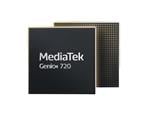
MediaTek Genio 520 and 720
The MediaTek Genio 720 and Genio 520 deliver scalable edge AI performance with up to 10 TOPS, powered by an integrated 8th-generation Neural Processing Unit (NPU) for hardware-accelerated AI workloads. Built on a 6nm process with an octa-core CPU architecture, these platforms balance performance and power efficiency for advanced edge and IoT applications, including fanless and battery-powered designs. Supporting up to 16GB of LPDDR5 memory, they enable deployment of edge-optimized generative AI and large language models such as Llama, Gemini, Phi, and DeepSeek. With rich multimedia, display, and connectivity options, Genio 720/520 is ideal for smart retail, HMI, and industrial edge systems.

Synaptics Astra™ Machina SL2600
The Synaptics Astra™ Machina SL2600 Development Kit enables fast prototyping of multimodal AI-native IoT applications with a modular, developer-friendly design. Powered by the SL2619 SoC and supported by a unified Yocto Linux® software stack, it delivers strong price-performance while simplifying development workflows. Integrated with the Synaptics Torq™ Edge AI platform, the kit combines a T1 NPU and Google Coral™ ML core to support on-device AI processing for audio, video, and text. With flexible I/O, pre-integrated wireless connectivity, and support for applications such as smart home, industrial automation, robotics, and healthcare, it accelerates time to market for intelligent edge solutions.

Edge AI vs CPU, GPU, and NPU Frequently Asked Questions
What is Edge AI and how does it relate to CPUs, GPUs, and NPUs?
Edge AI refers to AI processing that happens directly on the device instead of in the cloud. In this context, CPUs, GPUs, and NPUs are the hardware that execute those workloads. Edge AI defines where computation happens, while these processors determine how efficiently it is performed at the system level.
Edge AI refers to AI processing that happens directly on the device instead of in the cloud. In this context, CPUs, GPUs, and NPUs are the hardware that execute those workloads. Edge AI defines where computation happens, while these processors determine how efficiently it is performed at the system level.
What is the role of a CPU in edge AI systems?
The CPU in edge AI systems handles general-purpose tasks such as running the operating system, managing application logic, and coordinating system functions. It can also run lightweight AI inference, but it is less efficient for large-scale parallel workloads compared to GPUs and NPUs.
The CPU in edge AI systems handles general-purpose tasks such as running the operating system, managing application logic, and coordinating system functions. It can also run lightweight AI inference, but it is less efficient for large-scale parallel workloads compared to GPUs and NPUs.
What is the role of a GPU in edge AI systems?
The GPU in edge AI systems accelerates highly parallel workloads such as AI training and high-throughput inference. Its architecture is well suited for processing large volumes of data simultaneously, but it typically requires more power, which can limit use in constrained edge environments.
The GPU in edge AI systems accelerates highly parallel workloads such as AI training and high-throughput inference. Its architecture is well suited for processing large volumes of data simultaneously, but it typically requires more power, which can limit use in constrained edge environments.
What is the role of an NPU in edge AI systems?
The NPU in edge AI systems is designed specifically for efficient AI inference. It is optimized for neural network operations, enabling low-latency, low-power performance. This makes NPUs ideal for always-on applications such as voice recognition, facial detection, and real-time vision processing.
The NPU in edge AI systems is designed specifically for efficient AI inference. It is optimized for neural network operations, enabling low-latency, low-power performance. This makes NPUs ideal for always-on applications such as voice recognition, facial detection, and real-time vision processing.
What are the main differences between CPU, GPU, and NPU in edge AI applications?
The main differences come down to specialization. CPUs are flexible and handle general computing tasks, GPUs are optimized for parallel processing and high-throughput AI workloads, and NPUs are purpose-built for efficient AI inference. Most edge AI systems use a combination of all three depending on workload requirements.
The main differences come down to specialization. CPUs are flexible and handle general computing tasks, GPUs are optimized for parallel processing and high-throughput AI workloads, and NPUs are purpose-built for efficient AI inference. Most edge AI systems use a combination of all three depending on workload requirements.
Why is processor selection important in edge AI systems?
Processor selection is critical in edge AI systems because it directly impacts latency, power efficiency, thermal performance, and overall system reliability. The wrong architecture can lead to overheating, slow inference, or poor battery life, while the optimal combination ensures stable and efficient on-device AI performance.
Processor selection is critical in edge AI systems because it directly impacts latency, power efficiency, thermal performance, and overall system reliability. The wrong architecture can lead to overheating, slow inference, or poor battery life, while the optimal combination ensures stable and efficient on-device AI performance.
How can Braemac Americas help with edge AI processor selection and system design?
Braemac Americas helps OEMs design and optimize edge AI systems by providing access to a broad portfolio of CPUs, GPUs, and NPUs, along with engineering expertise. Their team supports component selection, tradeoff analysis, and system design to ensure efficient, reliable embedded solutions from concept through production.
Braemac Americas helps OEMs design and optimize edge AI systems by providing access to a broad portfolio of CPUs, GPUs, and NPUs, along with engineering expertise. Their team supports component selection, tradeoff analysis, and system design to ensure efficient, reliable embedded solutions from concept through production.
About Ray Pan
Ray Pan is an Applications Engineer at Symmetry Electronics. He has a Bachelor’s in Electrical Engineering from San Jose State University. With over 15 years of hands-on experience in the electronics industry, Ray serves as an excellent technical consulting resource for design engineers. Specializing in consumer and professional audio-video, FPGA, and mmWave applications–Ray develops insightful technical articles, conducts technical trainings for inside sales and customers, provides system architecture analyses, and interprets market trends covering technical products. Recognized for his talents and contributions, Ray is the proud recipient of the Lattice Semiconductor FAE of the Year 2020 Award for America.
Subscribe
Stay up to date with industry and supplier news!