- Home
- Braemac Blog
- 5 Real-World Use Cases for IoT in Agriculture
5 Real-World Use Cases for IoT in Agriculture

About Hope Carpenter
Hope Carpenter is a Digital Marketing Specialist at the Exponential Technology Group (XTG). With a background in journalism and marketing, she brings a research-driven, detail-oriented approach to technical content development within the electronic components industry. Her work focuses on translating complex engineering concepts into clear, accurate digital content that supports engineers and technical decision-makers, while strengthening brand visibility across XTG.
Farms are getting smarter every day, using IoT (Internet of Things) technologies to gather real-time data, monitor crops, and make faster, more informed decisions. The pressure is urgent: labor shortages, climate variability, sustainability mandates, and rising input costs are pushing producers to a breaking point. Grain farmers are navigating a 2026 market recession, pesticide spending is surging due to resistant species like the spotted lantern fly and Japanese jumping worm, and much of North America's soil is magnesium depleted. The industry needs smarter tools, not more labor. The global agriculture IoT market is currently valued at $18.5 billion and expected to reach $27.5 billion by 2030, reflecting expanding adoption of data driven farming, remote sensing networks, and precision agriculture solutions. Through LPWAN expansion, edge AI, satellite connectivity, and digital twin technology, farm IoT provides the infrastructure to monitor crops, optimize inputs, and scale precision agriculture across every acr
Defining Smart Agriculture
Smart agriculture integrates IoT devices, connectivity, and data analytics into farming operations to enable real-time decision-making across the full production cycle. The sensor layer is the foundation: soil moisture and nutrient sensors, weather stations, livestock wearables, and machine telemetry all generate continuous field-level data.
That data needs a reliable path to travel. LoRaWAN and NB-IoT are built for low-power, wide-area coverage across remote fields. 5G and Wi-Fi handle high-bandwidth applications closer to farm infrastructure. Satellite fills the gaps where no terrestrial network reaches at all.
Once the data arrives, edge gateways handle local processing before passing it to cloud analytics platforms and data lakes where trends, predictive models, and farm-wide insights are built using machine learning.
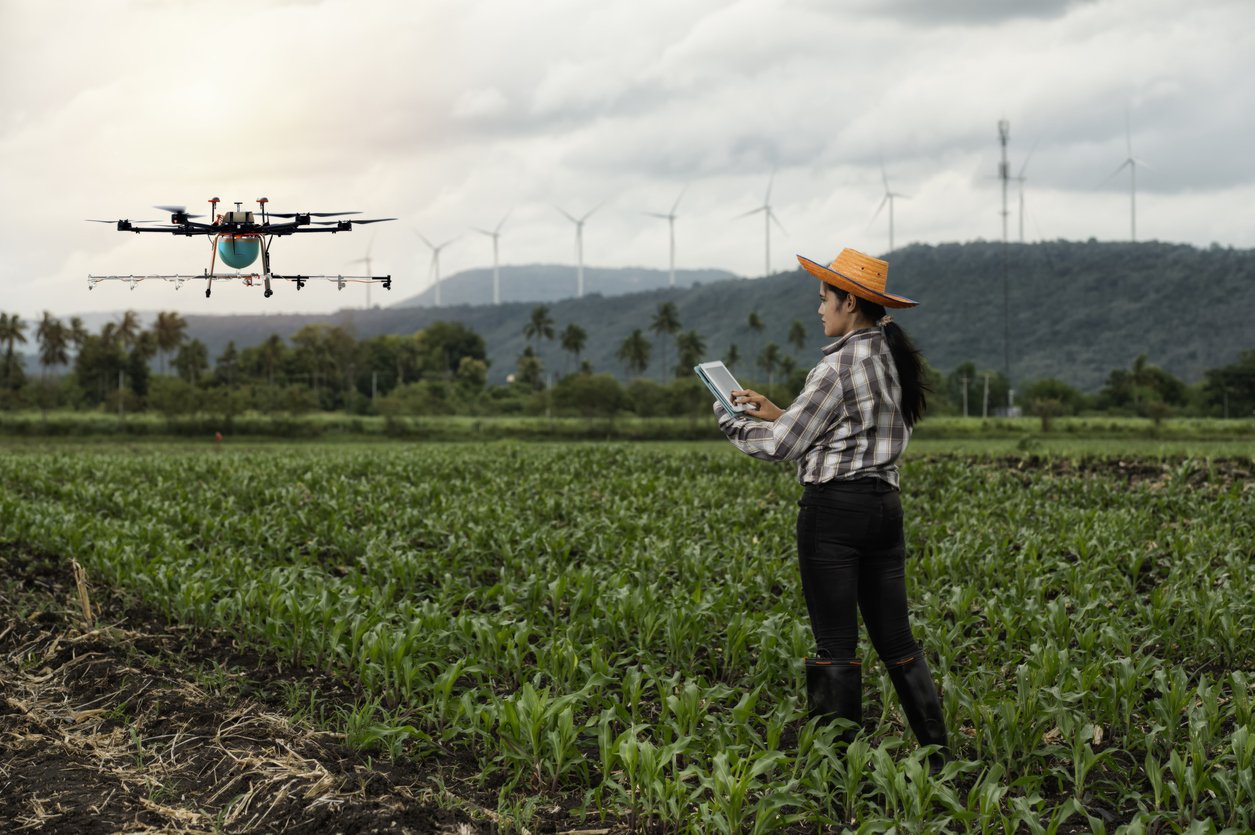
For that pipeline to hold, it needs to be secure and interoperable. Security in smart agriculture goes beyond access controls. Identity verification, authorized equipment access, and encrypted data transmission protect operations from both cyber threats and unauthorized interference. Interoperability is equally important. A farm running sensors, drones, and machinery from different vendors needs those systems to communicate, otherwise data driven insights remain siloed, and farm management decisions lack full visibility.
5 High-Value IoT Use Cases in Agricultural Operations
IoT technologies give agricultural operations real-time visibility into conditions that were previously hard to monitor at scale. Connected IoT devices, automated control systems, and other IoT solutions give farmers deeper insight into environmental conditions, crop yields, and operational performance. These tools allow agricultural teams to act on field-level data faster, reducing waste and improving production outcomes across large and complex farming environments.
1. Precision Irrigation
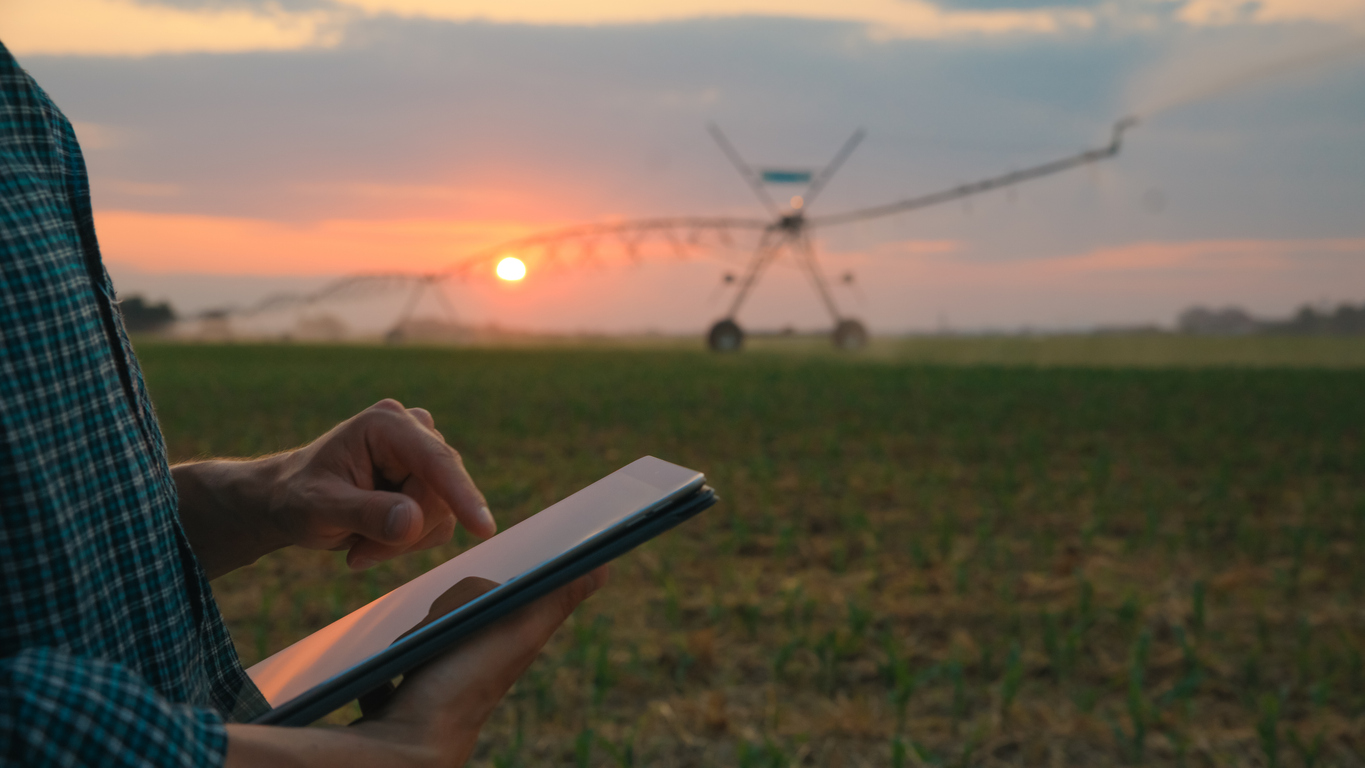
Soil sensors and environmental monitors collect real-time data on moisture, temperature, and rainfall. Automated irrigation systems use this data to water crops precisely when needed, reducing waste, conserving resources, and maintaining optimal soil conditions for healthy growth.2. Crop monitoring and Yield Prediction
Field sensors, UAVs, and satellite imagery track plant health throughout the growing cycle. Multispectral imaging detects stress signals like disease or nutrient deficiencies, while machine learning and historical data support accurate yield forecasts and proactive crop management.
3. Livestock Health and Tracking
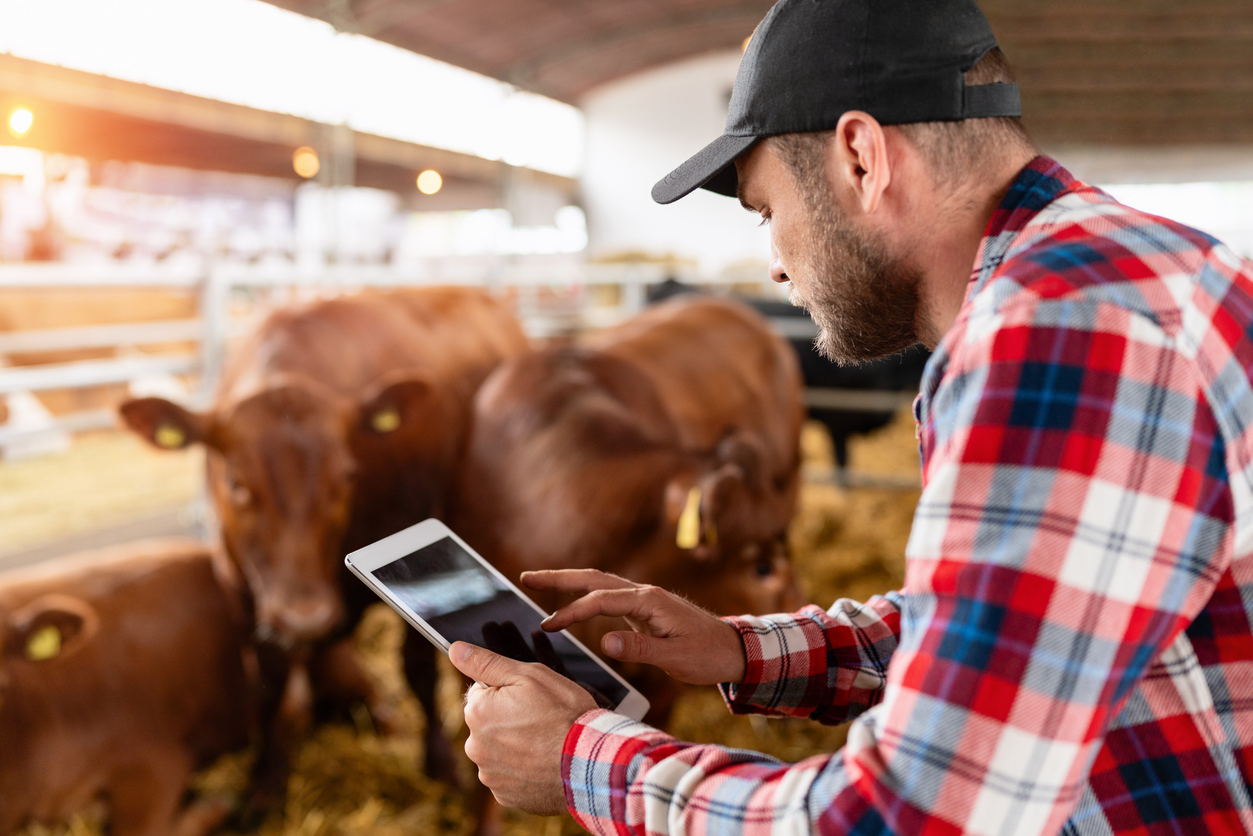
Biometric wearables and GPS devices monitor animal health, activity, and location. Alerts for abnormal temperature or movement help prevent illness, while geofencing keeps livestock within designated areas and feed monitoring optimizes nutrition programs.
4. Smart Greenhouses
Sensors and automation systems control temperature, humidity, lighting, and CO₂ levels. Automated adjustments maintain ideal growing conditions, increase yield consistency, and reduce energy and operational costs.
5. Supply Chain Management
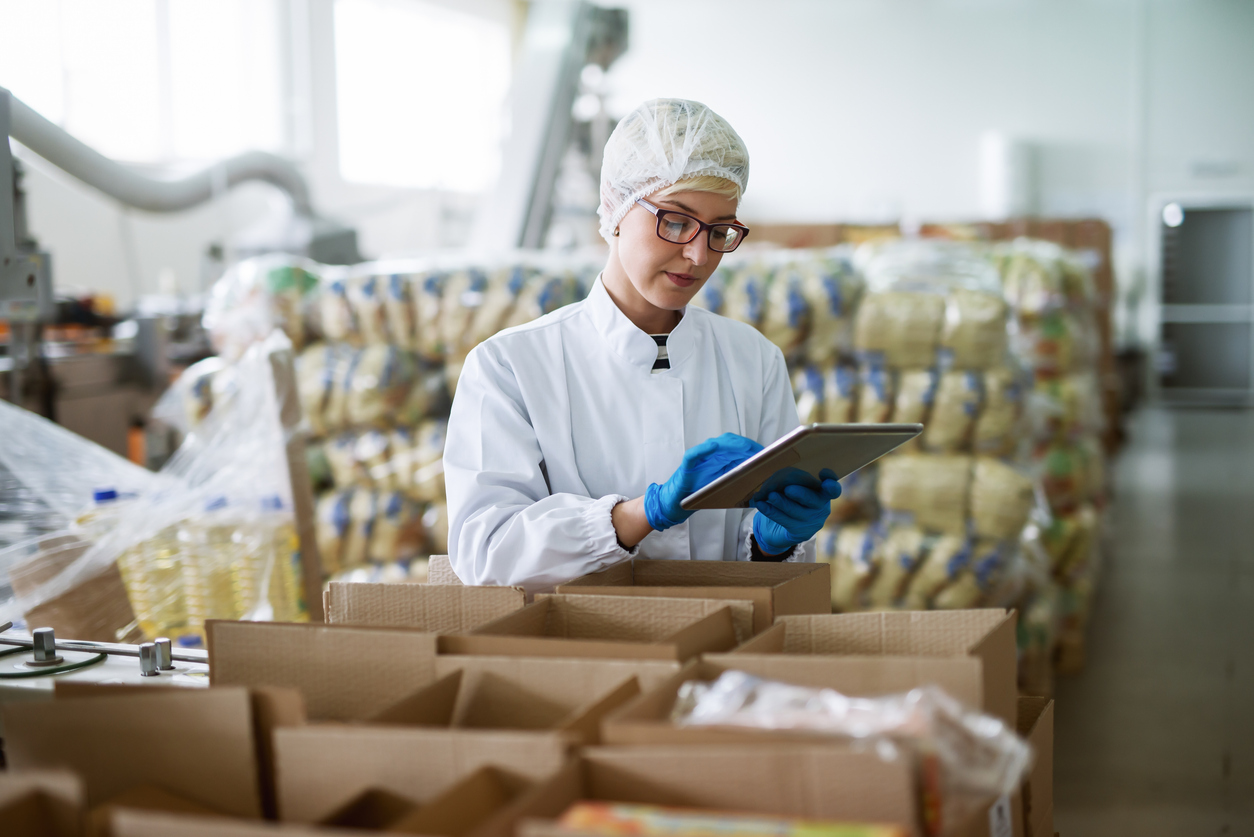
IoT sensors enable cold-chain monitoring by tracking temperature and humidity during transport and storage, helping preserve perishable goods. Provenance tracking provides visibility into origin and movement, supporting food safety standards and regulatory compliance.

Addressing IoT’s Impact on Agricultural
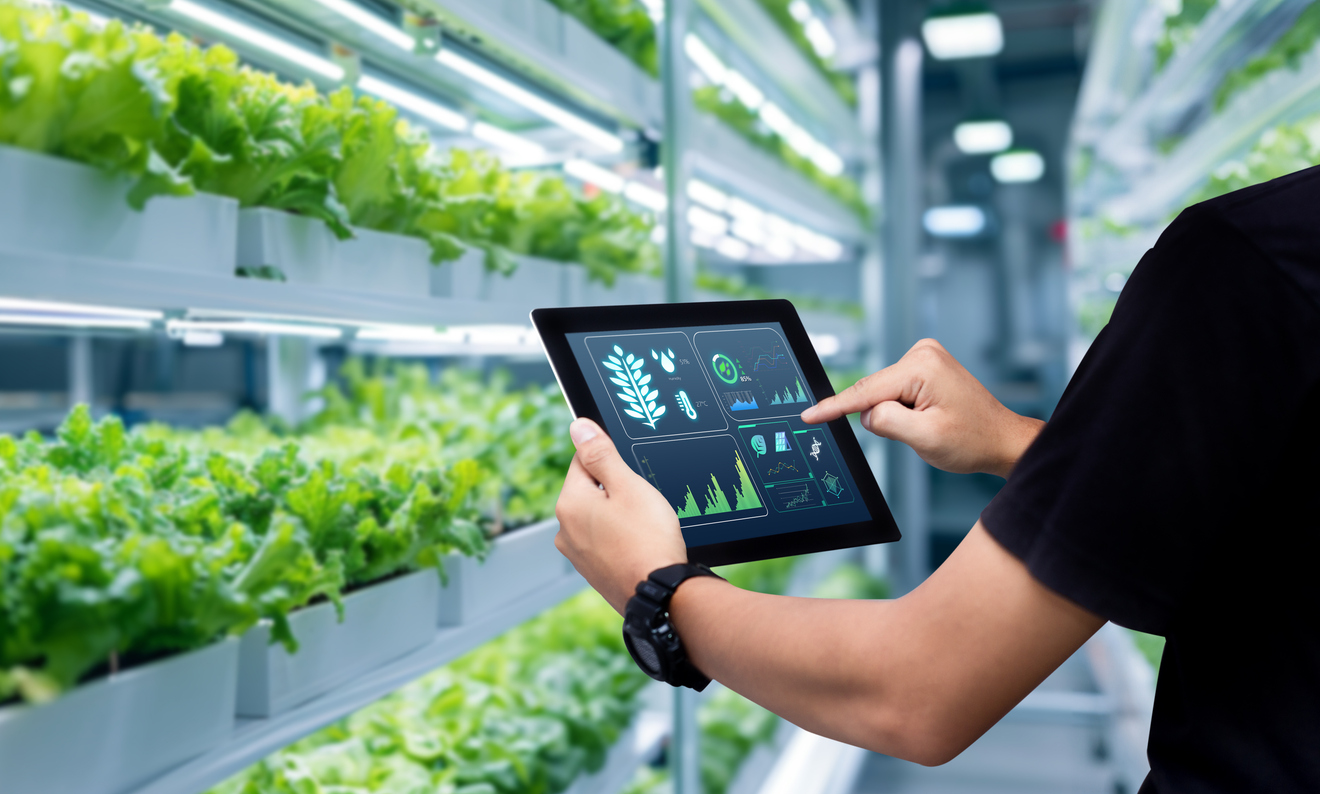
IoT technologies help farms operate more efficiently by providing real-time visibility into environmental conditions, irrigation systems, and field activity. Connected gateways and sensor modules allow farms to collect data across large and remote fields, enabling better monitoring and faster decision making.
For example, a Netherlands-based rose grower uses an IoT-enabled monitoring system to track temperature and humidity for its “Red Naomi” roses. This approach improves climate control and crop health while reducing the need for manual oversight. In another case, a precision irrigation platform deployed in a 40-acre asparagus trial reduced water use by 750,000 gallons and nearly doubled yields, increasing production from about 800 to 1,500 pounds per acre.
Large-scale soil monitoring is also helping farms manage water more effectively. At a potato operation spanning 2,000 acres, soil moisture sensors provided real-time insights that reduced water use by more than 30% while helping mitigate plant stress and disease. These deployments demonstrate how IoT-driven agriculture can improve efficiency, increase yields, reduce risk, and support more sustainable farming practices.
Future Proofing Smart Farm Innovations with Solutions Now Available at Braemac Americas
As farm IoT evolves, developers and integrators need solutions that are future ready. Key considerations include support for autonomous robotics and drones, compatibility with AI-driven digital twins, integration with next-generation sensors, and capabilities for regenerative agriculture optimization. Solutions should also provide high data throughput, low latency, and the flexibility to add new IoT devices without overhauling existing infrastructure.
Braemac Americas, through its network of smart agriculture technology partners, offers comprehensive solutions that meet these requirements. By providing access to sensors, edge gateways, LPWAN modules, and IoT solutions, Braemac Americas enables developers and farmers to deploy scalable precision agriculture systems, optimize farm management, and stay aligned with emerging smart agriculture trends.
Digi International
Digi International provides secure IoT connectivity solutions that help modernize agricultural operations through precision farming, remote monitoring, and automation. By connecting sensors, equipment, and control systems across fields, barns, and greenhouses, Digi technology enables real-time visibility into soil conditions, livestock health, irrigation systems, and other critical assets, helping farmers increase yields, reduce costs, and operate more sustainably. These capabilities are supported by a range of Digi routers, modules, and connectivity solutions designed for agricultural deployments.
Digi XBee® 3 Global LTE Cat 1
Digi XBee® 3 Global LTE Cat 1 smart modems simplify cellular connectivity for OEM devices and IoT gateways. These pre-certified modules support multiple LTE bands, 2G/3G fallback, Bluetooth Low Energy, and moderate-bandwidth applications while enabling rapid deployment. Built-in MicroPython programmability, Digi Remote Manager®, and Digi XBee Studio make configuration, scripting, and device management fast and easy. These modules provide real-time location with GNSS, MQTT support for Azure and AWS, and plug-and-play SIM activation for fast, secure IoT


Digi ConnectCore® MP1
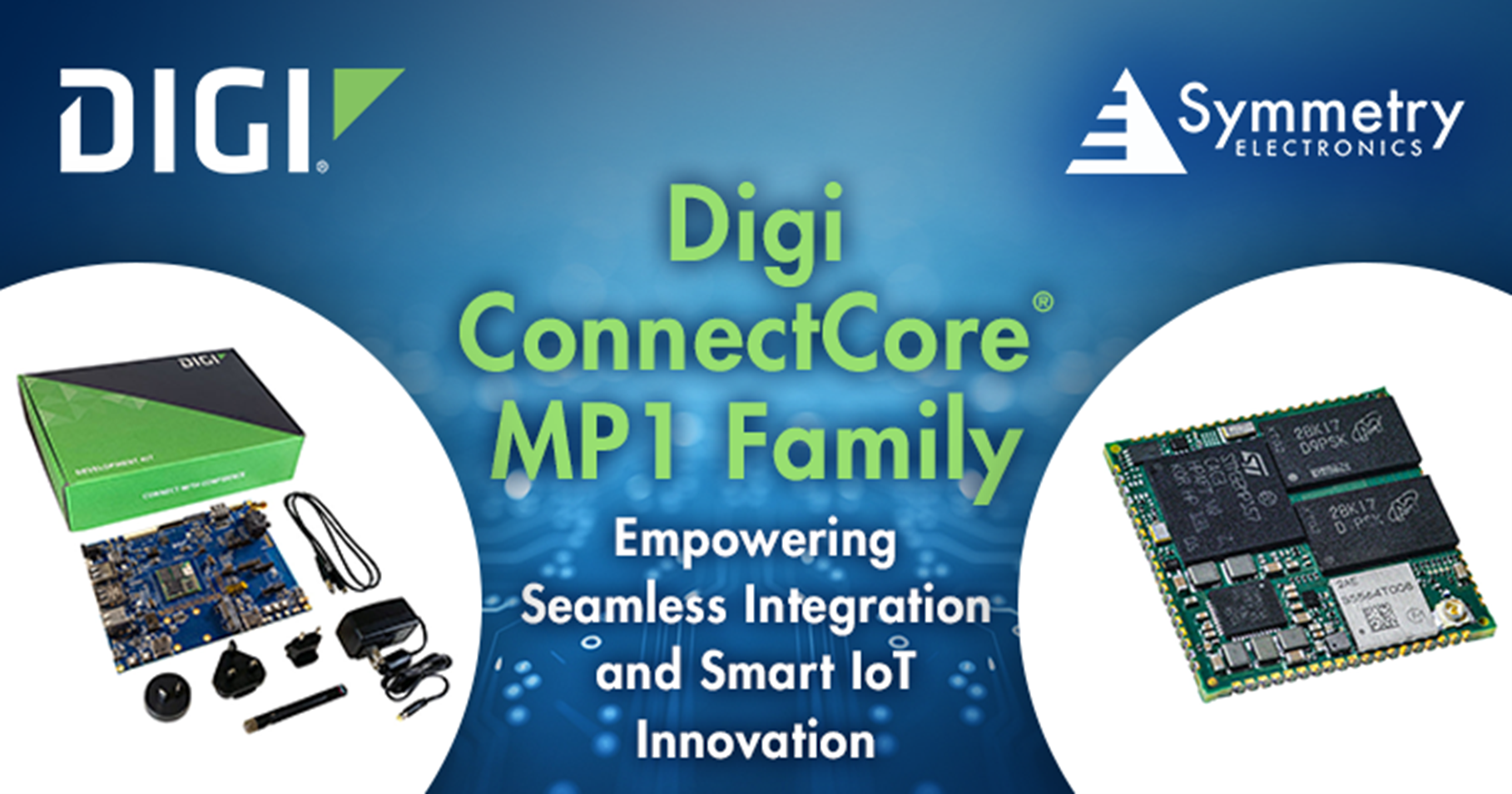
Digi ConnectCore® MP1 modules are intelligent, secure system-on-modules built on STM32MP13/MP15 processors. They offer pre-certified dual-band Wi-Fi 5, Bluetooth® 5.2, Gigabit Ethernet, and a 3D GPU with camera support for advanced HMI displays. The Digi SMTplus® 29×29 mm form factor provides reliability and pin-compatibility with ConnectCore 6UL SOMs, while built-in Digi TrustFence® security, Digi Embedded Yocto® Linux, and Digi ConnectCore Cloud Services enable secure, scalable, and remotely managed IoT applications. Seamless integration with Digi XBee® modems and power management features make these modules ideal for industrial, medical, and connected-device solutions.


Digi IX Cellular Routers
The Digi IX10, IX20, and IX30 cellular routers deliver secure, reliable LTE connectivity for industrial, infrastructure, and remote IoT applications. Designed for rugged environments, these routers support dual SIM failover, advanced networking features, and robust security through Digi TrustFence®, enabling resilient communications across distributed deployments. With flexible interfaces, centralized management through Digi Remote Manager®, and support for private LTE and FirstNet Capable™ models, the IX series provides scalable networking solutions for mission-critical and edge connectivity.


MultiTech
MultiTech empowers farms and agribusinesses with IoT connectivity to improve productivity, sustainability, and profitability across the entire value chain. Their LoRaWAN® and cellular solutions provide real-time insights into crop health, livestock welfare, environmental conditions, and equipment performance even in remote fields. Whether for precision crop production, controlled-environment agriculture, mixed farming, or forestry operations, MultiTech helps operators make smarter decisions, optimize resource use, and reduce costs while improving yields. Scalable and low-maintenance devices make it easy for farmers, agronomists, and service providers to monitor, automate, and manage every aspect of their operations.
MultiTech Conduit® AP 300
The MultiTech Conduit® AP 300 Series Access Point features the mPower™ Edge Intelligence operating system, serving as a secure and versatile gateway for LoRaWAN® IoT devices. Supporting Ethernet, cellular, and LoRaWAN connectivity, it enables seamless data transmission between end devices and network or cloud infrastructure. Built with an SX1303 8-channel LoRa baseband processor and LoRaWAN 1.0.4 compliance, the AP includes secure boot, data encryption, dual-image partitioning, and support for Python, C, C++, JavaScript, and Node.js. Integrations with MultiTech DeviceHQ® and embedded LoRa Network Server allow easy management of networks, devices, and applications, while internal or external antenna options and configurable packet forwarding ensure reliable and flexible deployment for industrial, smart building, retail, or agricultural applications.

MultiTech rCell 300
The MultiTech rCell® 300 Series is an industrial-grade LTE Cat 4 edge-intelligent router that securely connects multiple devices via Serial, Ethernet, or Wi-Fi to the Internet, cloud, and on-premise SCADA platforms. Key features include WAN failover, advanced firewall and routing, GNSS support, dual SIMs for cellular redundancy, dual Ethernet ports, and programmable edge-native applications in BASH, Python, and C++. Remotely manage rCell 300 fleets using MultiTech Device Manager for zero-touch provisioning, policy and application management, and secure over-the-air firmware updates. Optional Wi-Fi 6 supports up to 16 devices.


IoT in Smart Agriculture Frequently Asked Questions
What is IoT in smart agriculture?
IoT in smart agriculture refers to the use of connected devices, sensors, and networks to collect and analyze data from farms. IoT in smart agriculture enables real-time monitoring of soil, crops, and environmental conditions, helping farmers make data driven decisions and optimize farm operations.
IoT in smart agriculture refers to the use of connected devices, sensors, and networks to collect and analyze data from farms. IoT in smart agriculture enables real-time monitoring of soil, crops, and environmental conditions, helping farmers make data driven decisions and optimize farm operations.
How do IoT devices improve crop yield?
IoT devices improve crop yield by providing continuous monitoring of soil, weather, and plant health. By using farm IoT sensors and analytics platforms, farmers can detect stress, nutrient deficiencies, or disease early, allowing for precision farming interventions that support healthier crops and higher production outcomes. For example, WaterBit precision irrigation on a 40-acre asparagus trial cut water use by 750,000 gallons and nearly doubled yields.
IoT devices improve crop yield by providing continuous monitoring of soil, weather, and plant health. By using farm IoT sensors and analytics platforms, farmers can detect stress, nutrient deficiencies, or disease early, allowing for precision farming interventions that support healthier crops and higher production outcomes. For example, WaterBit precision irrigation on a 40-acre asparagus trial cut water use by 750,000 gallons and nearly doubled yields.
What are the top IoT applications in agriculture?
Top IoT applications in agriculture include precision irrigation, crop monitoring and yield prediction, livestock health tracking, smart greenhouses, and supply chain management. These IoT applications leverage sensor networks, machine learning, and remote sensing to optimize farm management and enable smarter agricultural practices.
Top IoT applications in agriculture include precision irrigation, crop monitoring and yield prediction, livestock health tracking, smart greenhouses, and supply chain management. These IoT applications leverage sensor networks, machine learning, and remote sensing to optimize farm management and enable smarter agricultural practices.
How does precision farming use IoT technologies?
Precision farming uses IoT technologies to apply water, fertilizer, and pesticides exactly where and when they are needed. IoT technologies such as sensors, edge gateways, and drones allow precision agriculture systems to monitor crops in real time and make data driven adjustments that enhance efficiency and reduce waste. Claassen Farms used Sensoterra sensors with MultiTech modules to improve water use across thousands of acres of potato fields.
Precision farming uses IoT technologies to apply water, fertilizer, and pesticides exactly where and when they are needed. IoT technologies such as sensors, edge gateways, and drones allow precision agriculture systems to monitor crops in real time and make data driven adjustments that enhance efficiency and reduce waste. Claassen Farms used Sensoterra sensors with MultiTech modules to improve water use across thousands of acres of potato fields.
What role do unmanned aerial vehicles (UAVs) play in farm IoT?
UAVs, or drones, play a key role in farm IoT by capturing high-resolution imagery and multispectral data of crops. UAVs integrated with IoT solutions provide real-time insights for crop monitoring, yield prediction, and early detection of stress or disease, supporting smarter farm management and precision agriculture.
UAVs, or drones, play a key role in farm IoT by capturing high-resolution imagery and multispectral data of crops. UAVs integrated with IoT solutions provide real-time insights for crop monitoring, yield prediction, and early detection of stress or disease, supporting smarter farm management and precision agriculture.
How does data analytics support smart agriculture?
Data analytics supports smart agriculture by turning data from IoT devices into actionable insights. Analytics platforms process information from sensors, drones, and edge devices to identify trends, forecast crop yields, optimize irrigation, and detect potential risks, making farm IoT operations more efficient and data driven.
Data analytics supports smart agriculture by turning data from IoT devices into actionable insights. Analytics platforms process information from sensors, drones, and edge devices to identify trends, forecast crop yields, optimize irrigation, and detect potential risks, making farm IoT operations more efficient and data driven.
What security considerations are important for farm IoT?
Security in farm IoT is essential to protect data and ensure reliable operations. Key considerations include identity verification for devices, authorized equipment access, encrypted data transmission, and secure cloud and edge platforms to prevent cyber threats and unauthorized interference.
Security in farm IoT is essential to protect data and ensure reliable operations. Key considerations include identity verification for devices, authorized equipment access, encrypted data transmission, and secure cloud and edge platforms to prevent cyber threats and unauthorized interference.
What are the key components of a smart agriculture system?
Key components of a smart agriculture system include IoT devices like soil and weather sensors, connectivity solutions such as LoRaWAN, NB-IoT, or 5G, edge gateways for local processing, cloud analytics platforms, and machine learning models. Together, these components monitor crops, livestock, and farm infrastructure effectively, enabling precision farming at scale.
Key components of a smart agriculture system include IoT devices like soil and weather sensors, connectivity solutions such as LoRaWAN, NB-IoT, or 5G, edge gateways for local processing, cloud analytics platforms, and machine learning models. Together, these components monitor crops, livestock, and farm infrastructure effectively, enabling precision farming at scale.
How does IoT enhance sustainability in farming?
IoT enhances sustainability in farming by optimizing resource use, reducing water and energy waste, and enabling targeted interventions. Farm IoT systems like precision irrigation and smart greenhouse controls reduce water use and can nearly double crop yields, supporting environmentally responsible farming practices. Porta Nova, for instance, uses MultiTech gateways to monitor temperature and humidity for its “Red Naomi” roses, improving crop health while reducing manual oversight.
IoT enhances sustainability in farming by optimizing resource use, reducing water and energy waste, and enabling targeted interventions. Farm IoT systems like precision irrigation and smart greenhouse controls reduce water use and can nearly double crop yields, supporting environmentally responsible farming practices. Porta Nova, for instance, uses MultiTech gateways to monitor temperature and humidity for its “Red Naomi” roses, improving crop health while reducing manual oversight.
How can Braemac Americas help farmers implement IoT in smart agriculture? Braemac Americas works with leading smart agriculture technology providers to supply IoT sensors, edge gateways, LPWAN modules, and AI-ready infrastructure. By partnering with Braemac Americas, developers and farmers can access scalable, secure, and interoperable solutions that support precision farming, data driven decision-making, and next-generation smart agriculture innovations.
About Hope Carpenter
Hope Carpenter is a Digital Marketing Specialist at the Exponential Technology Group (XTG). With a background in journalism and marketing, she brings a research-driven, detail-oriented approach to technical content development within the electronic components industry. Her work focuses on translating complex engineering concepts into clear, accurate digital content that supports engineers and technical decision-makers, while strengthening brand visibility across XTG.
Tags:
Edge Computing
,
Environmental Monitoring
,
IoT
,
LPWAN
,
Precision Irrigation
,
Sensors
,
Smart Agriculture
,
Smart Farming
Subscribe
Stay up to date with industry and supplier news!