- Home
- Braemac Blog
- Bluetooth® 4.2 vs 5.0 to 6.0 and Beyond
Bluetooth® 4.2 vs 5.0 to 6.0 and Beyond
What the New Standard Means for Modern IoT Designs

About Cobus Heukelman
Since its early days, Bluetooth® has evolved alongside demands of wireless connectivity. What began as a short-range cable replacement has turned into a core technology connecting everything from consumer electronics to industrial IoT (IIoT), sensor networks, smart building systems, and more.
While many connected designs still integrate legacy versions, the release of Bluetooth v6.0, and now v6.2, introduces advanced capabilities that support today’s real-world environments. Ensuring your designs support the most up-to-date Bluetooth enhances reliability, reduces latency, improves battery life, and maximizes scalability. Guided by the Bluetooth SIG, each new release is purpose-built to build on prior versions while preserving backward compatibility. The question is no longer simply Bluetooth v4.2 vs v5.0 but rather how and where legacy versions fit into v6.0-centric design strategy.
How Bluetooth v4.2 to v5.0 Laid the Foundation for Modern IoT
Originally introduced in v4.0, Bluetooth Low Energy (LE) marked a significant turning point in compact, power-constrained devices. V4.2 further strengthened IoT suitability with improved coexistence with LTE networks, enhanced connection reliability, better privacy controls, faster data handling, and support for direct internet connectivity.
The release of v5.0 expanded on the Bluetooth LE architecture of v4.2, expanding data rate, range, and broadcast capacity. Developers gained the flexibility to optimize designs across four selectable data rates (1Mpbs, 2Mbps, 500kbps, and 125kbps) to allow tradeoffs between throughput and RF performance.
At its highest data rate, v5.0 achieves a practical net throughput of approximately 1.4Mbps, enabling audio streaming applications that were impractical with previous versions. At lower data rates, particularly 125kbps, v5.0 can extend communication range up to four times that of v4.2 in ideal conditions.

| Feature | Bluetooth v4.1 | Bluetooth v5.0 | Benefit |
|---|---|---|---|
| Data Range | 1 Mbps | Up to 2 Mbps | Faster audio streaming and data transfer |
| Range | ~50 m | ~200 m | Expanded coverage for sensors and devices |
| Broadcast Capability | Standard packets | 8x larger packets | More data per transmission and higher throughput |
| Power Efficiency | Standard | Enhanced | Optimized for low-power sensors and devices |
Bluetooth v5.0 and Beyond
Following the release of v5.0, Bluetooth continued to mature through incremental updates:
Bluetooth v5.1
Released in 2019, v5.1 introduced direction-finding capabilities using Angle of Arrival (AoA) and Angle of Departure (AoD) that enabled indoor positioning and asset tracking.
Bluetooth v5.2
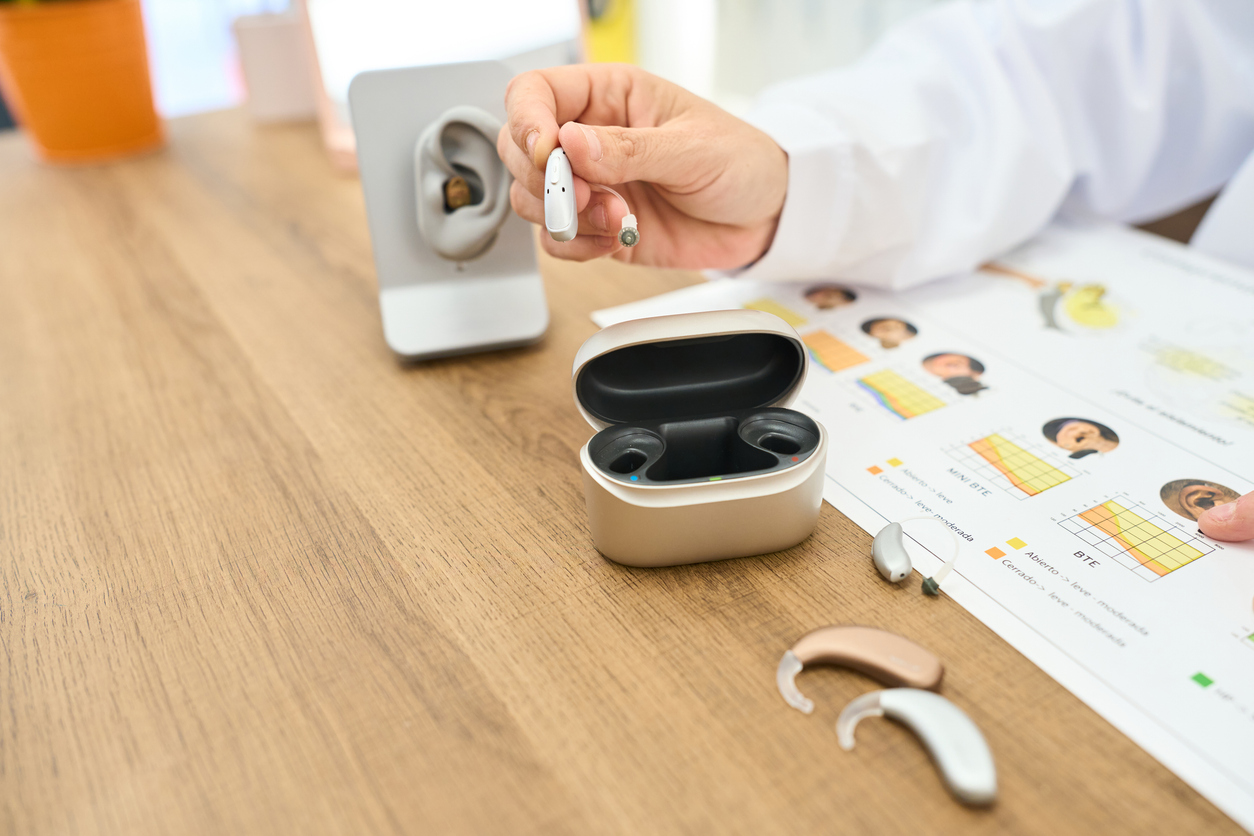
Released in 2020, v5.2 added LE Audio, which brought higher-quality audio streaming, multi-stream audio support, and enhanced accessibility for hearing aids. It also introduced Isochronous Channels, enabling synchronized data transmission across multiple devices.These capabilities allowed for new applications like synchronized audio in multi-speaker setups, better collaboration in connected workplaces, and more robust industrial IoT communications.
Bluetooth v5.3
Bluetooth v5.3 focused on efficiency and reliability. It improved power management to extend battery life, optimized advertising behavior for faster device discovery, and enhanced connection stability in crowded or interference-heavy environments. These changes made it easier for devices to coexist in dense IoT ecosystems, such as smart factories, connected vehicles, and large-scale sensor networks.

Bluetooth 5.4
Released most recently, v5.4 expanded Periodic Advertising with Responses (PAwR), allowing devices to communicate in time-synchronized star network topologies. This made it possible to efficiently manage hundreds or even thousands of devices in large-scale industrial or commercial deployments, such as smart cities or expansive warehouse networks.
v5.4 also enabled more predictable data delivery and better network coordination for mission-critical applications. These updates addressed specific challenges in device management, efficiency, and communication, setting the stage for more advanced functionality in Bluetooth v6.0.
How and Why to Transition to v6.0-Centric Designs
For teams moving from Bluetooth 5.x, Bluetooth 6.0 introduced several foundational capabilities that enable modern, scalable designs, including shorter connection intervals, isochronous communication, and enhanced channel management. Bluetooth 6.2 builds on these features, adding enhancements and new capabilities to further improve performance:
- Shorter Connection Intervals (SCI) Improvements: While SCI was introduced in 6.0, 6.2 optimizes latency and response times for more demanding real-time IoT applications and sensor networks.
- Enhanced Channel Sounding: 6.0 provided basic distance and proximity measurement capabilities, but 6.2 enables more precise phase-based ranging and round-trip timing, ideal for asset tracking, smart building systems, and proximity-aware applications.
- HCI USB Low Energy Isochronous Support: 6.0 introduced Low Energy Isochronous Channels; 6.2 standardizes isochronous communication over USB with Bulk Serialization Mode, improving data transport reliability and supporting Bluetooth Low Energy Audio over USB devices.
- Low Energy Test Mode Enhancements: 6.0 offered test mode support, whereas 6.2 introduces a unified protocol with over-the-air RF PHY testing, simplifying testing and reducing reliance on cabled setups.
v6.2’s features extend battery life, improve performance in dense environments, and enhance reliability, making the Bluetooth 6.x platform, particularly v6.2, an ideal solution for IIoT, smart buildings, and connected device deployments.
Benefits of Upgrading to v6.2
For developers, Bluetooth 6.2 is more than an incremental update. It introduces targeted enhancements that directly improve how IoT systems are designed, deployed, and maintained. Shorter SCI and LE ACL SCI reduce latency and improve responsiveness, making it easier to support real-time applications such as industrial monitoring, asset tracking, and smart building controls without relying on complex workarounds or custom implementations.
Bluetooth 6.2 also introduces flushable ACL data, allowing outdated or unnecessary data packets to be discarded before transmission. This improves efficiency in dense networks, reduces congestion, and ensures that time-sensitive data is prioritized. Combined, these improvements enable more predictable communication and better performance as device density increases.
By improving responsiveness, reliability, and data handling, Bluetooth 6.2 helps extend battery life, reduce device downtime, and lower maintenance demands. For development teams, this means less time troubleshooting network limitations and a faster time to market.
How Braemac Americas Helps You Transition to Next-Generation Bluetooth
At Braemac Americas, supporting advanced wireless design goes beyond component distribution. As part of our comprehensive suite of value-added services, we offer free consultation and direct access to our in-house engineering experts, helping teams navigate the complexity of transitioning between Bluetooth generations. Our partnerships with best-in-class suppliers ensures your access to an extensive portfolio that simplifies your path innovation.
Silicon Labs EFR32XG24
The XG24-PK6036A is a complete Channel Sounding Wireless Pro Kit from Silicon Labs, designed to help engineers get started with the EFR32xG24 Wireless Gecko SoC. With integrated XG24-RB4198A, the kit features 1536 kB Flash, 256 kB RAM, a PCB antenna with 10 dBm output, and an SMA connector for external antennas, making it ideal for Bluetooth Channel Sounding and other wireless applications.
Mainboards feature on-board debugging with a J-Link debugger, Packet Trace Interface, Virtual COM port, sensors, and peripherals for easy development and testing. Full software support through Simplicity Studio, Energy Profiler, and Network Analyzer gives developers all the tools they need to quickly design and test wireless applications.


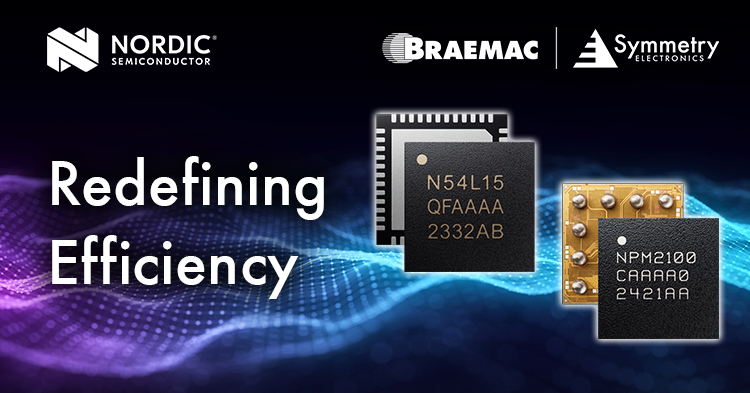
Nordic Semiconductor nRF54L15
As the largest memory variant of the nRF54L Series from Nordic Semiconductor, the nRF54L15 is an optimal solution for a broad range of demanding wireless applications. The nRF54L15 is an ultra-low-power wireless SoC with 1.5 MB NVM, 256 KB RAM, a 128 MHz Arm Cortex-M33, and a 128 MHz RISC-V coprocessor.
With support for Bluetooth LE (with optional features including Channel Sounding), Thread®, Matter, and Zigbee®, it’s ideal for designs that demand a compact footprint that won’t compromise on performance. Additionally, the nRF54L15 development kit serves as a comprehensive, cost-friendly single-board devkit that encompasses the full potential of the SoC with the support of Nordic’s extensive nRF Connect tools.


Frequently Asked Questions (FAQ)
Is Bluetooth 5.0 still relevant in 2026?
Yes. Bluetooth 5.0 is still widely used across many products and deployments. However, migrating to 6.x support is an important step for futureproofing connected designs and taking advantage of next-generation features.
Yes. Bluetooth 5.0 is still widely used across many products and deployments. However, migrating to 6.x support is an important step for futureproofing connected designs and taking advantage of next-generation features.
What advantages does Bluetooth v6.2 offer over earlier versions?
Bluetooth 6.2 delivers lower latency, improved connection responsiveness, enhanced battery efficiency, and advanced Channel Sounding for accurate distance and proximity awareness. These features are especially beneficial in dense device environments and connected systems.
Bluetooth 6.2 delivers lower latency, improved connection responsiveness, enhanced battery efficiency, and advanced Channel Sounding for accurate distance and proximity awareness. These features are especially beneficial in dense device environments and connected systems.
When should developers consider upgrading to Bluetooth v6.2?
Developers should consider Bluetooth v6.2 when designing systems that demand faster response times, improved energy efficiency, or accurate distance and proximity measurement. It is especially relevant for new designs intended to scale or remain in production long term.
Developers should consider Bluetooth v6.2 when designing systems that demand faster response times, improved energy efficiency, or accurate distance and proximity measurement. It is especially relevant for new designs intended to scale or remain in production long term.
Can Bluetooth v6.2 communicate with older Bluetooth devices?
Yes, Bluetooth v6.2 maintains backward compatibility with earlier versions such as v4.2 and v5.0. However, advanced capabilities like Shorter Connection Intervals and Periodic Advertising with Responses require support on both devices to function.
Yes, Bluetooth v6.2 maintains backward compatibility with earlier versions such as v4.2 and v5.0. However, advanced capabilities like Shorter Connection Intervals and Periodic Advertising with Responses require support on both devices to function.
How does Bluetooth v6.2 support large-scale device deployments?
Bluetooth v6.2 supports synchronized, energy-efficient communication through features like Periodic Advertising with Responses and decision-based advertising filtering, helping maintain reliability and battery life as device density increases.
Bluetooth v6.2 supports synchronized, energy-efficient communication through features like Periodic Advertising with Responses and decision-based advertising filtering, helping maintain reliability and battery life as device density increases.
How should you transition from legacy Bluetooth versions to v6.2?
Transitioning to Bluetooth v6.2 should be approached as a guided design upgrade rather than a simple version swap. Braemac Americas supports this process through free consultation and direct access to in-house engineering experts who help teams evaluate requirements, select the right modules, and optimize designs for performance, latency, and power efficiency. By working with best-in-class suppliers and leveraging Braemac Americas wireless expertise, teams can simplify the move to v6.2 and build more scalable, future-ready IoT solutions.
Tags:
Asset Tracking
,
BLE
,
Bluetooth
,
Bluetooth 5.4
,
Bluetooth 6.0
,
Channel Sounding
,
IIoT
,
Nordic Semiconductor
,
Silicon Labs
,
Smart Building
,
Wireless
Subscribe
Stay up to date with industry and supplier news!